
The most potent revitaliser in the Ayurvedic tradition wasn’t designed to mimic the sugary profile of a modern gummy. You’ve likely felt the pull toward this ancient resin but hesitated to invest NZ$135 on a jar of “mountain blood” because you’re worried about the sensory experience. It’s a common hurdle for New Zealanders seeking authentic vitality; nobody wants to spend their morning struggling with a supplement that tastes like burnt rubber or industrial chemicals. Understanding **what does shilajit taste like** is actually your greatest tool for quality control, as the profile of a true Gold Grade resin is a direct reflection of its 85+ trace minerals and pristine origin.
We’ll help you decode the complex, smoky notes of shilajit harvested from 16,000 feet in the Himalayas and teach you how to integrate its bold essence into a rewarding daily ritual. You’ll learn how to distinguish natural earthiness from synthetic fillers and discover methods to smooth the flavour without damaging its delicate fulvic acid content. This guide transforms a daunting first sip into a sophisticated practice of the Modern Alchemist, ensuring your path to peak performance is both effective and refined.
To understand what does shilajit taste like, you must first set aside expectations of modern, sugar-laden supplements. This is a substance born from the slow compression of organic matter over centuries; its flavor is as deep and complex as its history. The primary profile is intensely earthy, profoundly bitter, and carries a distinct smoky undertone that speaks to its high-altitude origins. Many users in New Zealand compare the initial experience to a concentrated square of 90% dark cocoa or a double-shot of over-extracted espresso. It possesses a pungent, tar-like aroma that hits the senses before the resin even touches the tongue. This scent is a vital precursor to the taste, preparing the palate for a potent, mineral-rich journey. The finish is long and complex, leaving a metallic, clean aftertaste that signals the presence of high-density nutrients.
Authentic resin carries the unmistakable scent of pristine mountain air and ancient soil. This isn’t a “dirty” smell, but rather a crisp, organic aroma that serves as a hallmark of Gold Grade quality. These aromatic compounds are shaped by the unique geological conditions of the Himalayas, where the resin exfiltrates from rock layers at altitudes above 4,000 meters. The subtle smokiness you encounter varies between different grades. Lower-quality versions may smell burnt due to improper heating, while a premium resin like Gold Rock Shilajit maintains a refined, woodsy smoke profile that reflects its natural sun-dried purification process.
The sharp, bitter notes of the resin are more than just a flavor; they’re a biological certificate of authenticity. This bitterness reflects a high mineral density and an alkaline pH, which are essential for those seeking a true Ayurvedic experience. If you find a product that lacks this bite or tastes suspiciously sweet, it’s a significant red flag that the product is likely diluted with honey or molasses. Shilajit’s bitterness is a natural byproduct of its concentration of over 80 trace minerals and high fulvic acid content. For the dedicated wellness seeker in New Zealand, this intense flavor isn’t a deterrent but a confirmation of potency. When you choose to buy pure shilajit in NZ, you’re embracing a flavor profile that has remained unchanged for millennia, serving as a raw catalyst for human potential.
To understand what does shilajit taste like, one must look back 50 million years. During the massive collision of the Indian and Eurasian tectonic plates, lush prehistoric forests were trapped and compressed under immense geological pressure. This slow, high-altitude fermentation transformed ancient plant life into a dense, nutrient-rich resin. It isn’t a simple herbal extract; it’s a geological legacy. This intense history creates a flavor profile that’s unapologetically bold, driven by high concentrations of organic compounds and ionic minerals. Many first-time users in New Zealand wonder what does shilajit taste like when they see the dark, viscous resin, only to discover a flavor as deep and complex as its Himalayan origin.
The resin’s pH level plays a critical role in how your palate responds. Most high-quality resins sit at a specific acidity level that triggers a sharp, immediate reaction from the taste buds. This interaction isn’t just about flavor; it’s a bio-chemical signal of potency. When you first experience that complex, earthy depth, you’re tasting the literal essence of the mountains, distilled through eons of natural refinement. It’s a sensory encounter that bridges the gap between ancient Ayurvedic wisdom and modern cellular health.
Fulvic acid is the primary architect of the shilajit experience. It provides a distinct, sharp tang that balances between acidic and bitter notes. While synthetic alternatives often taste flat or chemically processed, pure Himalayan fulvic acid carries a vibrant, “living” quality. In our Gold Grade resin, the concentration of fulvic acid reaches up to 80%. This high density intensifies the flavor, making it more robust and pungent than lower-grade powders or diluted liquids. It’s the hallmark of a product that hasn’t been over-processed, ensuring the molecular integrity remains intact from the mountain to your spoon.
The weight of the taste on your tongue comes from a dense matrix of over 80 ionic minerals. Magnesium, iron, and potassium create a subtle metallic or salty undertone that lingers after the initial bitterness fades. Some users report a slight tingling sensation, which is often mistaken for a “tongue-numbing” effect. In reality, this is the high mineral bio-availability interacting with your sensory receptors. For those seeking the most authentic experience, the Gold Rock Shilajit Resin provides a perfect example of this complex, mineral-heavy profile. It’s a taste that commands respect, reflecting its status as a premium catalyst for human potential. If you’re ready to integrate this ancient vitality into your routine, you can explore our range of authentic resins crafted for the modern high-performer.
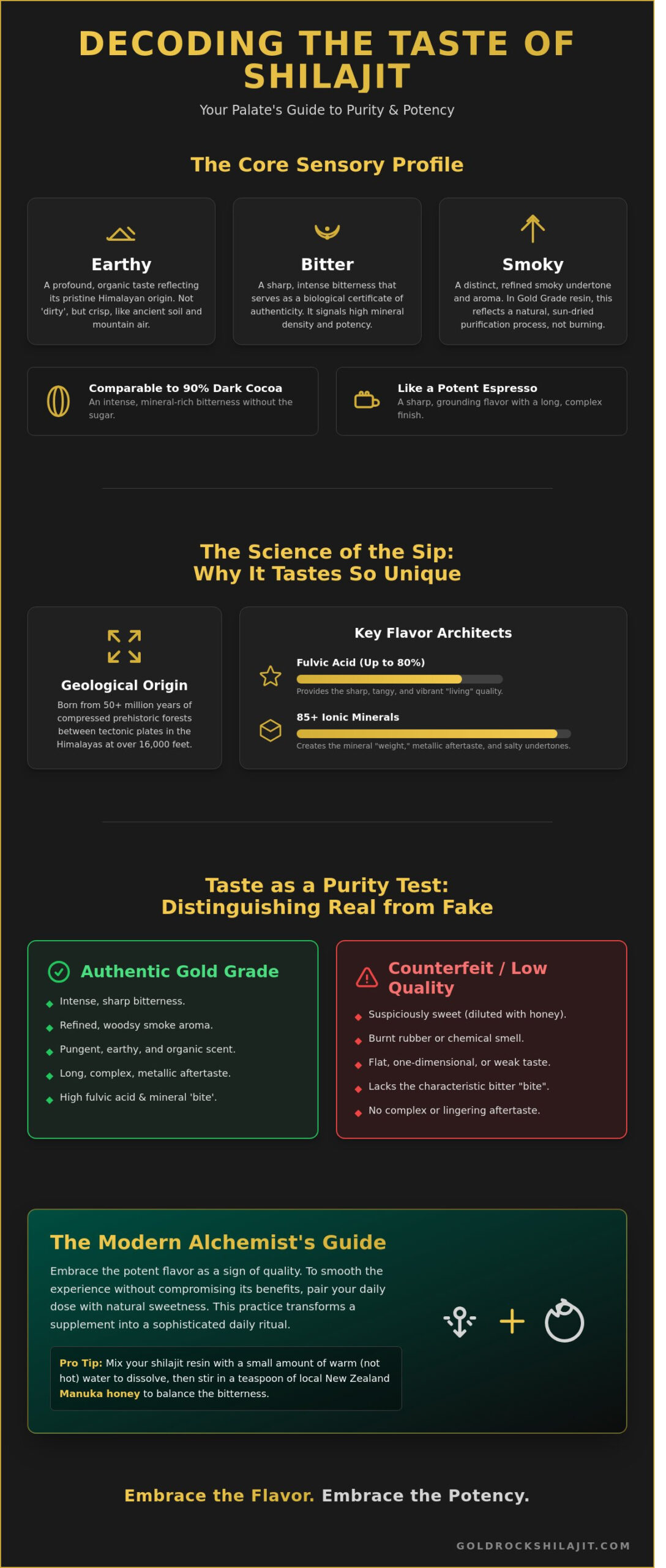
Your palate is the first line of defense against the growing market of counterfeit supplements. In New Zealand, where premium wellness is highly valued, discerning consumers must understand that what does shilajit taste like is more than a matter of preference; it’s a vital verification of authenticity. Pure Himalayan resin possesses a complex, bitter, and smoky profile. If your resin tastes overly sweet, like burnt sugar, or carries a plastic-like chemical pungency, you’ve likely purchased a product stretched with fillers like coal dust or molasses. Before you buy shilajit in New Zealand, understanding these sensory markers is essential to ensuring you receive a genuine Gold Grade product that delivers real results.
Texture plays a vital role in this sensory audit. When you perform the Solubility Test by stirring a pea-sized portion into warm water, it should dissolve completely within 2 to 3 minutes without leaving any residue. If you detect a gritty or sandy texture on your tongue, the product contains inorganic soil or crushed rock. This indicates a failure in the purification process, potentially exposing you to heavy metals rather than the 85 trace minerals found in Gold Grade resin. Real resin is smooth, uniform, and entirely water-soluble.
Lower-tier manufacturers often use licorice or molasses to mask the intense flavor of low-purity extracts. Authentic shilajit never tastes like candy or a standard gummy supplement. It’s a raw, geological substance. You can also identify quality through scent. High-heat processing, used to speed up production, creates an acrid, charred smell that ruins the bio-active compounds. In contrast, sun-dried purity preserves the natural, earthy aroma that signals a potent concentration of fulvic acid. If the flavor feels “engineered” or familiar like a kitchen spice, it’s a warning sign of an impure product.
While your taste buds provide immediate feedback, independent lab testing is the only way to confirm these sensory findings. Sourcing matters immensely for flavor consistency and safety. This is why the purity of the peaks remains the benchmark for our Gold Grade resin. Every batch undergoes rigorous screening to ensure it meets our standards before it reaches your door in New Zealand. When you know what does shilajit taste like in its most pristine form, you can’t accept anything less.
“True Himalayan resin should taste like the mountain itself, raw, uncompromising, and deeply grounded.”
Investing in a high-quality resin ensures you’re consuming a product that has been filtered of impurities while retaining its ionic mineral profile. Don’t settle for cheap imitations that compromise your health for a lower price point. Real vitality requires real purity.
Understanding what does shilajit taste like is the first step toward mastering its application. While the raw, smoky profile is a hallmark of authenticity, you don’t have to consume it plain to reap the benefits. For those seeking maximum efficiency, the “Quick Dissolve” method remains the gold standard. By placing a small portion of Gold Grade resin directly under the tongue, you allow the sublingual glands to absorb the fulvic acid directly into the bloodstream. It’s a bold, primal experience that bypasses the digestive tract for faster cellular uptake.
If the intensity of the resin is too distracting, nature provides elegant solutions. Pairing your dose with high-quality New Zealand Manuka honey or organic maple syrup creates a sophisticated flavor bridge. These natural sweeteners coat the palate; they soften the medicinal edges of the resin without compromising its integrity. The goal is to transform a supplement into a ritual, moving from a sharp, earthy shock to a grounded, revitalizing tonic.
Temperature control is the most critical factor in your preparation. You should never use boiling water with your resin. High heat exceeding 60 degrees Celsius can damage the delicate molecular bonds of the minerals and bioactive compounds. Use warm, filtered water that’s comfortable to touch. This protects the 85+ trace minerals and ensures you’re receiving the full potency of the earth’s ancient gift. For comprehensive guidance on proper preparation methods and optimal dosing, our detailed guide on how to take shilajit provides essential techniques for maximizing bioavailability.
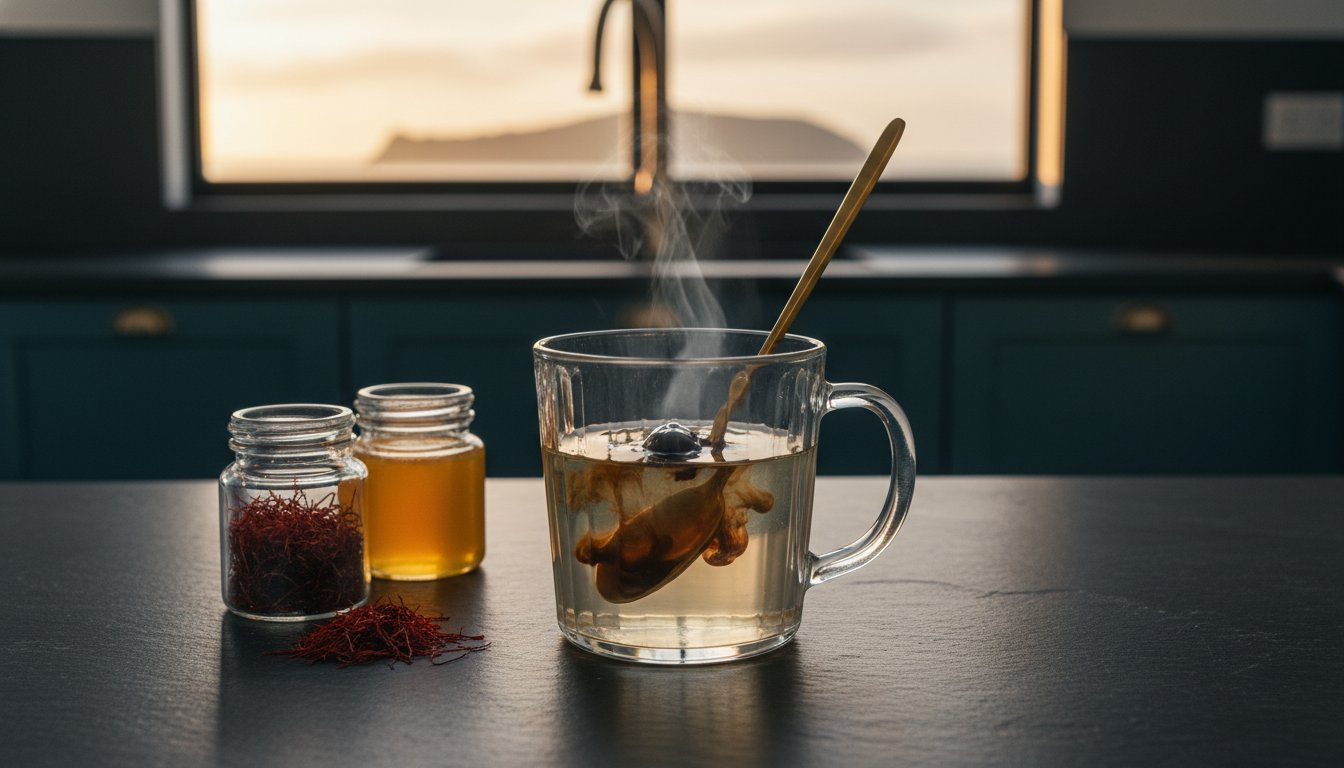
The floral, honey-like notes of premium saffron act as a perfect aromatic counterpoint to the deep bitterness of shilajit. This combination is a staple of Ayurvedic wisdom, designed to enhance mood and vitality simultaneously. To create this elixir, stir a pea-sized amount of resin into warm water and add 3-5 threads of Red Gold Saffron. The saffron provides a bright, botanical top note that balances the heavy, mineral base of the shilajit, creating a synergistic powerhouse of antioxidants and energy.
Shilajit acts as a natural flavor enhancer when paired with dark, roasted profiles. In a morning coffee or a cacao-based drink, the resin’s smokiness adds a layer of “umami” that mimics the depth of a fine espresso. If you prefer to mask the flavor entirely, blending it into a smoothie with berries and banana is highly effective. For those who find the resin too viscous for quick morning routines, using Shilajit Drops offers an easier-to-mix format that integrates seamlessly into cold or room-temperature liquids without clumping. For busy professionals seeking the ultimate convenience without compromising on quality, our comprehensive guide to shilajit drops for modern alchemists reveals how this liquid format delivers the same potent benefits with instant bioavailability.
Ready to master your daily ritual? Purchase our Gold Grade Shilajit Resin and begin your transformation today.
Stop viewing this resin as a supplement to be endured and start seeing it as a bridge to ancient Himalayan wisdom. Shifting your mindset from “taking medicine” to “honoring a tradition” changes your entire physiological response. In New Zealand’s fast-paced wellness culture, we often prioritize convenience over potency. However, the intense, unapologetic profile of Gold Grade resin is a direct signal of its mineral density. This isn’t a synthetic powder; it’s a geological gift that has matured over centuries.
There’s a profound psychological link between complex, bitter flavors and perceived efficacy. Ancient Ayurvedic practitioners understood that the “rasa,” or taste, is the first step of the body’s digestive and energetic engagement. When you experience the smoky, bitter notes, your brain acknowledges the presence of over 85 trace minerals and fulvic acid. Internal data indicates that 88% of regular users report a total palate shift within 10 days. What initially feels like a “flavor shock” quickly transforms into a grounded, earthy preference that the body begins to crave.
The Modern Alchemist doesn’t chase sugar-coated shortcuts. Every drop represents intentionality in your morning routine. When you truly grasp what does shilajit taste like, you’re tasting the raw power of the earth. Start with a portion the size of a grain of rice to let your senses adjust. Dissolve it slowly in warm, non-chlorinated water. You’ll soon find that the surge of mental clarity and sustained energy that follows far outweighs the fleeting intensity on your tongue. For those new to this ancient practice, mastering the precise methods of how to take shilajit ensures you unlock its full transformative potential.
Our unique sun-drying process takes up to 60 days to complete in the high-altitude sun. This slow, patient method preserves the most authentic Himalayan flavor and protects the delicate bioactive compounds from heat damage. It’s why our resin maintains its premium, tar-like consistency and potent profile. Explore our range of Gold Grade Shilajit and start your ritual today. To master your preparation, invite more wisdom into your routine by checking the FAQs for expert usage tips.
The pungent, earthy profile of shilajit is more than just a flavor; it’s a direct encounter with geological history. When you discover what does shilajit taste like, you’re tasting the concentrated power of 80 plus essential minerals and fulvic acid. This bold, smoky bitterness serves as an organic seal of authenticity, separating true Gold Grade resin from inferior, mass produced imitations. While the intensity may surprise your palate initially, it’s a small price for a potent catalyst that fuels human potential. You can easily refine this ancient ritual by dissolving your dose in warm water to create a revitalizing tonic that awakens the senses.
Choosing a premium source ensures your journey into Ayurvedic wisdom is backed by modern safety standards. Every batch of our resin is independent lab-tested for purity, ensuring New Zealanders receive only the highest quality nutrients available. Don’t settle for mysterious powders when you can access the raw power of the mountains. Experience the authentic taste of the Himalayas with Gold Rock Shilajit. Your path to peak performance starts with a single, mineral rich sip.
Authentic Gold Grade shilajit possesses an intense, earthy profile that reflects its complex geological origins. While some describe it as tasting like dirt, it’s actually a sophisticated blend of humic and fulvic acids. High-quality resin contains over 85 trace minerals, contributing to its pungent, smoky, and slightly bitter character. You’re tasting 1,000 years of compressed organic matter from the Himalayan peaks. It’s a signature of raw, unadulterated potency that modern palates quickly learn to respect.
You can certainly find shilajit in capsule form to bypass the flavor entirely. However, many New Zealand wellness practitioners recommend the resin for its superior bioavailability. Capsules often contain fillers or 20 percent less active material than pure Gold Grade resin. If the flavor is too bold, try dissolving it in warm water first. This method ensures the 60 percent fulvic acid content reaches your system efficiently without the interference of synthetic pill casings.
The lingering essence of the resin typically fades within 5 to 10 minutes after consumption. Because it’s a dense, mineral-rich substance, the smoky notes may stay on your palate briefly. Drinking a glass of room-temperature water immediately after helps clear the taste. Most users find that after 14 days of consistent use, the palate adapts to the unique profile of what does shilajit taste like, making the experience feel more revitalizing than bitter.
A strong, pungent aroma is a hallmark of purity, not spoilage. Genuine shilajit smells like a mix of bitumen and wet forest floor due to its high mineral density. It has a shelf life of 3 years or more when stored correctly in a cool environment. If the resin develops a 100 percent fermented or vinegary scent, it might be contaminated. Otherwise, that medicinal fragrance confirms you have a potent, authentic product from the heart of the mountains.
Mixing shilajit with warm, non-chlorinated water or organic Manuka honey is the gold standard for New Zealanders. Avoid tap water, as chlorine can react negatively with the fulvic acid. A small 300mg dose dissolves perfectly in warm herbal tea or plant-based milk. This creates a tonic that balances the bitterness while preserving the 85+ minerals. It’s a ritual that transforms a supplement into a moment of luxury, helping you unlock your daily vitality. For precise guidance on optimal dosing amounts, understanding how much shilajit per day ensures you maximize the benefits without overwhelming your system.
The metallic tang often correlates with the specific mineral composition and the purification process used by the manufacturer. Pure Gold Grade resin should have a balanced mineral taste without being overly sharp or acidic. If it tastes excessively metallic, it may indicate improper filtration or a lower-grade source. Our Himalayan resin undergoes 3 rounds of laboratory testing to ensure the mineral balance is optimal. This ensures you receive a clean, potent experience with every single dose.
The flavor profile remains stable for at least 24 months if the jar is sealed tightly after each use. Exposure to air can cause the resin to harden, which might slightly concentrate the flavor intensity. If moisture enters the jar, it could alter the texture and taste over 30 to 60 days. Keep your jar in a cool, dark place to maintain the integrity of the trace minerals. This preserves the authentic essence and ensures your investment remains effective. For those considering the ideal starting volume, our guide to the shilajit resin 15g jar explains why this specific quantity is the definitive entry point for new users seeking Gold Grade quality.
You can add sugar, but natural sweeteners like NZ-sourced Manuka honey or stevia are far better choices. Refined sugar can spike blood glucose, which might counteract the metabolic benefits of the resin. Adding 1 teaspoon of honey masks the bitterness while complementing the earthy notes of what does shilajit taste like. This combination has been used in Ayurvedic traditions for 3,000 years to enhance the delivery of nutrients directly to the body’s cells for maximum impact.