

The violent, eye-watering jolt of ammonia isn’t actually gifting you strength; it’s merely tricking your nervous system into a fleeting state of survival-driven panic. You’ve likely witnessed athletes in local New Zealand powerlifting meets or on the rugby field cracking a capsule for that instant surge of focus. It’s a common ritual to combat mid-workout fatigue, yet we must ask: what do smelling salts do to your long-term physiological equilibrium? While that sharp inhalation triggers a 15-minute adrenaline spike, it often masks a deeper need for genuine, cellular energy.
We understand the desire for peak performance during those heavy lifts. You want focus that doesn’t feel like a chemical assault. This guide explores the biological mechanism of ammonia, why it’s a staple in high-stimulant culture, and how it compares to more sustainable alternatives. We’ll examine the science behind the “sniff” and introduce you to the ancient, Gold Grade wisdom of the Himalayas. Discover how to transition from synthetic shocks to a foundation of 85 plus trace minerals that honors your body’s natural rhythm and unlocks your true vitality.
Step into any high-performance gym from Auckland to Queenstown and you might witness a powerlifter snapping a small capsule before a heavy pull. This ritual isn’t merely theater; it’s a calculated biological disruption. To understand what do smelling salts do, we must look at the primal intersection of chemistry and survival. These compounds, primarily composed of ammonium carbonate, act as a sharp, chemical wake-up call to the human system. They serve as a bridge between a dormant state and a moment of peak physical output.
When you inhale the sharp scent, you’re engaging with what smelling salts are at their core: a concentrated irritant. The ammonia gas instantly irritates the delicate membranes of the nose and lungs. This triggers the “Inhalation Reflex,” a primitive survival mechanism that forces a sudden, deep breath. This isn’t just a gasp. It’s an involuntary command from the brain to flood the body with oxygen, preparing it for an immediate threat that doesn’t actually exist. The signal travels from the nasal cavity through the trigeminal nerve, striking the brainstem and immediately activating the sympathetic nervous system.
The potency of this experience relies on a simple yet effective chemical transition. Solid ammonium carbonate is relatively stable, but it reacts aggressively when it encounters moisture. In many traditional preparations, such as “aromatic spirits of ammonia,” ethanol or water acts as the carrier to facilitate this release. When the solid crystals meet the atmospheric moisture or an added liquid catalyst, they undergo a rapid decomposition that liberates pungent ammonia gas. It’s a precise transformation that turns a static powder into a kinetic sensory assault.
Your brain is a master of preservation. When it detects the sharp sting of ammonia, it doesn’t see a gym accessory; it interprets a toxic threat. This perception initiates a total takeover of the sympathetic nervous system. This is the fundamental answer to what do smelling salts do: they hijack the respiratory system to ignite the mind. Within milliseconds, the adrenal glands release a surge of epinephrine, commonly known as adrenaline, into the bloodstream. Heart rates can climb by 8 to 12 beats per minute almost instantly as the body prepares for a fight or flight scenario.
As a Modern Alchemist, one views this not as a mere irritation, but as a way to harness ancient survival reflexes for modern sport. It’s about tapping into the body’s hidden reserves. While the scent is fleeting, the physiological shift is profound, providing a temporary window of heightened awareness and explosive potential. This biological “Gold Grade” response ensures that every fiber of your being is aligned for the task at hand, mirroring the intense focus required for true transformation in the most demanding New Zealand environments.
Step into a high-stakes locker room in Auckland or a competitive powerlifting meet, and you’ll likely encounter a sharp, pungent aroma. This isn’t just a byproduct of intense training; it’s the intentional use of ammonia inhalants. Athletes use these capsules to bridge the gap between a resting state and a state of total physical aggression. When considering what do smelling salts do, the answer lies in their ability to flip a psychological switch. They shift the mind from “rest” to “attack” mode in under three seconds. This temporary masking of fatigue allows a hockey player to ignore a heavy bruise or a rugby league player to find a sudden burst of clarity before a crucial defensive set. In the NFL, data suggests that roughly 80% of players have utilized them to snap into focus before a kickoff.
For a powerlifter facing a 250kg squat, the challenge is as much mental as it is physical. Cracking a capsule triggers an immediate inhalation reflex. This sudden gasp floods the lungs with oxygen and sends a jolt to the central nervous system. Heart rates often spike by 8 to 12 beats per minute instantly. This prepares the body for a maximum effort PR attempt by “setting” the nervous system for peak output. However, this surge is fleeting. The effects peak within 15 seconds and usually vanish within a minute. Users should remain aware of the risks of smelling salts, as over-reliance can lead to mucosal irritation or the dangerous masking of serious injuries like concussions.
Athletes describe the sensation as a sudden “clearing of the fog.” It’s remarkably similar to having a bucket of ice-cold water thrown over your face during a mid-afternoon slump. Unlike caffeine or other systemic stimulants that require 45 minutes to digest, ammonia acts as a localized sensory irritant. It strikes the trigeminal nerve, forcing the brain into a state of high-alertness. Understanding exactly what do smelling salts do involves looking at this rapid respiratory response. It’s a primal reaction designed for survival. While these sharp jolts provide a temporary edge, those seeking a more grounded and enduring source of power often look toward the Gold Grade vitality found in ancient Himalayan resins. This approach prioritizes long-term cellular energy and mineral balance over a fleeting, 30-second chemical shock.
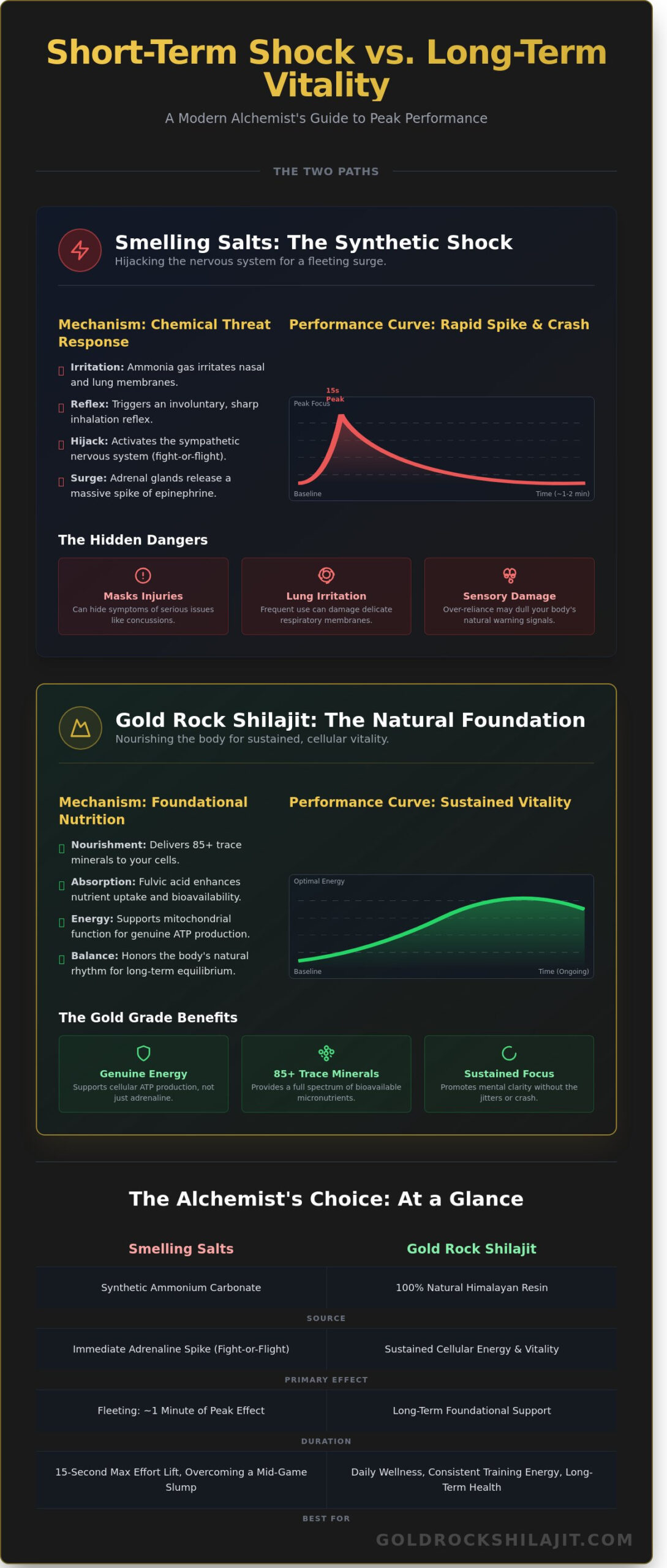
While the immediate jolt of ammonia provides a temporary peak, the physiological price can be steep if ignored. To truly understand what do smelling salts do, you must look past the ten second rush and consider the impact on your delicate internal systems. These inhalants aren’t benign; they’re concentrated chemical irritants that bypass your body’s natural filters to force an emergency response. Relying on this artificial “fight or flight” state can lead to a cycle of dependency that distances you from your body’s authentic signals.
Ammonia gas is highly caustic, often carrying a pH level above 11.0, which makes it aggressively alkaline. When inhaled too closely, it causes immediate inflammation of the nasal passages and the lining of the lungs. You must maintain a distance of at least 10 to 15 centimeters from the nose to avoid direct chemical burns. What do smelling salts do if used incorrectly? They can cause localized tissue damage and respiratory distress.
Signs of overexposure include persistent coughing, burning sensations in the chest, and watery eyes. For the approximately 1 in 7 New Zealanders living with asthma, these vapors can trigger severe bronchospasms. This makes them a high risk choice for anyone with existing respiratory sensitivities or pulmonary conditions.
Relying on a chemical spike creates a dangerous disconnect from your body’s internal wisdom. Frequent use leads to Central Nervous System (CNS) fatigue, where the brain requires increasingly higher doses to achieve the same level of alertness. This desensitization is a sign that your adrenal glands are being pushed beyond their natural capacity, potentially leading to long term burnout.
Research into smelling salts for athletic performance suggests that while they provide a brief psychological lift, they often mask underlying exhaustion or serious injuries like concussions. In the high contact environment of NZ rugby or combat sports, masking a head injury with a stimulant is a recipe for disaster. Instead of masking fatigue, a Modern Alchemist seeks to build resilience from the ground up. For those questioning are smelling salts bad for you, the answer lies in understanding the long-term respiratory and neurological risks of frequent ammonia exposure. True vitality comes from Gold Grade Shilajit, which supports the nervous system without the caustic crash of ammonia. Tactical tools should never replace the foundational health provided by earth’s most potent resins.
When high-performers ask what do smelling salts do, they’re usually seeking an immediate neuro-electrical override. It’s a sharp, chemical shock. This ammonia-induced surge forces the adrenal glands to dump cortisol and adrenaline instantly. It works for a moment, but the cost is high. You’re trading long-term nervous system health for a five-minute window of intensity. True vitality doesn’t come from a bottle of toxic fumes. It comes from deep, cellular resonance and Gold Grade nourishment that respects your biology.
Instead of forcing the body into a state of panic, the modern alchemist looks to fortify the adrenal architecture. Constant stimulation via ammonia can lead to “adrenal burnout,” a state where your natural response to stress becomes sluggish. Supporting the body with specific, earth-grown compounds allows for a sustained rise in energy that doesn’t end in a crash. It’s about building a foundation of power rather than stealing it from your future self. For those seeking a comprehensive approach to sustained vitality, exploring the best natural energy supplements provides a roadmap to authentic cellular power without the volatile crash of chemical stimulants.
A premium Himalayan shilajit resin offers a sophisticated alternative to the volatile nature of ammonia. While you might wonder what do smelling salts do for your PRs, the answer is often “not much” for your actual recovery. Fulvic acid acts as a biological ferry. It transports 80+ trace minerals directly into your mitochondria, the power plants of your cells. This process facilitates genuine ATP production. A 2012 study published in the Journal of Ethnopharmacology demonstrated that shilajit helps maintain muscle strength and mitochondrial function during high-intensity tasks. It’s a steady rise in performance that supports your athletic goals without the toxic inhalation.
Ancient traditions focused on Ojas, the subtle essence of vitality and immunity. They didn’t seek to shock the system; they sought to fortify it. Modern high-performers in New Zealand are now integrating shilajit drops into their daily protocols to build this enduring foundation. Purity is the cornerstone of this practice. Every batch of Gold Rock Shilajit undergoes rigorous, independent laboratory testing to ensure it meets our exacting standards. This ensures you’re receiving a pristine product free from heavy metals, allowing your nervous system to thrive in its most authentic state.
Ready to elevate your performance without the chemical crash?
Understanding what do smelling salts do reveals a mechanism based on irritation and emergency response. While effective for a momentary jolt, this method treats the nervous system like a machine to be forced into gear. The Modern Alchemist chooses a different path, focusing on the deep nourishment of the cellular landscape. By replacing the volatile sting of ammonia with the steady power of Himalayan minerals, you move away from adrenal exhaustion toward genuine vitality. Gold Grade Shilajit serves as this foundation, providing over 85 trace minerals and fulvic acid to support ATP production, the body’s actual energy currency.
For those seeking a sharp cognitive edge without the chemical crash, Red Gold Saffron offers a sophisticated solution. This Super Negin grade saffron acts as a potent neuroprotective agent, shielding the brain from oxidative stress. Unlike the temporary “shock” of asking what do smelling salts do for focus, saffron works by naturally supporting dopamine and serotonin levels. This creates a “clean” mental clarity that persists through a demanding afternoon in the office or a heavy session at the gym. Sourcing is the most critical factor here; premium threads contain significantly higher concentrations of crocin and safranal, ensuring the bioactive potency required for real results.
Transitioning to a sustainable routine requires a shift in perspective. Reviewing the Gold Rock Shilajit FAQ provides the essential knowledge for anyone ready to trade synthetic triggers for mineral-rich resilience. You can create a natural “adrenaline” hit by pairing your morning mineral resin with intentional breathwork. This practice oxygenates the blood and sharpens the senses without the risks of mucosal irritation. For those seeking additional metabolic support, understanding whats acv and its role in blood sugar regulation can complement your natural energy protocol. Consider these steps for your daily ritual:
Treating the body as a temple rather than a machine to be shocked leads to superior long-term performance. In the New Zealand market, where high-performance lifestyles are the norm, choosing purity over-stimulation ensures your energy remains as pristine as the Himalayan peaks themselves.
Understanding what do smelling salts do is the first step in moving from a frantic, short-term buzz toward true, high-performance longevity. While ammonia inhalants offer a 30-second adrenaline spike, they don’t nourish your cellular health or provide lasting stamina. Research published in the Journal of Strength and Conditioning Research indicates that while these inhalants trigger a sharp inhalation reflex, they don’t actually improve maximal force production during exercise. You’re trading long-term nervous system balance for a fleeting moment of chemical alarm that can leave your respiratory tract irritated and your body depleted.
True vitality requires a foundation of 80 plus essential trace minerals that support your body’s natural rhythm. Gold Rock Shilajit offers a bridge between ancient Ayurvedic wisdom and modern biohacking. Our Gold Grade resin is ethically sourced from the heart of the Himalayas and undergoes rigorous independent lab testing to ensure 100% purity for our New Zealand community. It’s a premium catalyst designed for those who demand excellence without compromise. Experience Sustained Vitality with Gold Grade Shilajit Resin and reclaim your natural edge today.
Step into a new era of grounded, sustainable power that honors your body’s potential and fuels your highest ambitions.
Using smelling salts every day is harmful because it causes chronic irritation and potential erosion of the nasal mucosal lining. The American Journal of Respiratory and Critical Care Medicine reports that repeated ammonia exposure leads to long term damage of the respiratory tissues. While you might seek a quick burst of energy, relying on this chemical shock disrupts your body’s natural equilibrium. Genuine vitality should emerge from within, not from harsh external irritants that provide a fleeting, synthetic spark.
Smelling salts can wake someone from a faint by triggering the inhalation reflex through the trigeminal nerve. This sudden respiratory response forces the body to take in more oxygen, which can restore consciousness within seconds. However, medical professionals in New Zealand hospitals advise against using them for head injuries. If a person faints due to a concussion, the sudden head jerk caused by the salts can worsen neck or spinal damage during the recovery process.
Inhaling excessive amounts of ammonia causes immediate chemical burns to the respiratory tract and potential lung edema. The New Zealand Environmental Protection Authority notes that ammonia concentrations exceeding 50 parts per million trigger significant irritation. High doses lead to a constricted airway or a persistent cough that can last for 48 hours. It’s a violent way to treat a body that deserves the pristine care of natural, Gold Grade nourishment and holistic mineral support.
Smelling salts are currently legal in professional sports and are not listed on the World Anti-Doping Agency prohibited list. Drug Free Sport NZ confirms that ammonia is not a banned stimulant for athletes in rugby or powerlifting. Despite their legality, many trainers prefer refined methods for mental clarity. Understanding what do smelling salts do helps athletes realize that while legal, they’re a blunt instrument compared to the sophisticated power of ancient, mineral rich resins. For those searching for smelling salts near me, consider exploring natural alternatives that provide sustained vitality without the chemical shock.
There is no clinical evidence that smelling salts cause direct brain damage, but they pose a hidden risk by masking traumatic brain injuries. A 2022 report in the British Journal of Sports Medicine states that the ammonia jolt can hide concussion symptoms, leading players back onto the field prematurely. This 10 second rush of adrenaline creates a false sense of security. True cognitive performance requires the sustained, holistic support found in laboratory validated, ancient Ayurvedic traditions.
Gold Grade Shilajit is the premier natural alternative for sustained focus and vitality without the harsh chemical shock. Unlike the brief spike of what do smelling salts do, Shilajit provides 84 trace minerals and fulvic acid to fuel your cells. This resin, harvested from the heart of the Himalayas, supports ATP production for lasting energy throughout the day. It’s a sophisticated choice for those seeking a premium catalyst for human potential without the risks of ammonia.
You should hold smelling salts at least 10 to 15 centimetres away from your nostrils to avoid direct chemical contact. Holding them closer can cause immediate blistering of the nasal passages or damage to the sensitive cilia. The primary goal is to catch the rising vapours, not to inhale the liquid or crystals directly. Safety is paramount when dealing with such a potent and volatile substance, even in a high performance environment like a gym.
Smelling salts aren’t chemically addictive like nicotine, but they can become a psychological crutch for athletic performance. Data from strength sports communities indicates that 12 percent of competitive lifters feel unable to hit a personal best without the ritual of the snap. This reliance moves you away from authentic self mastery. True power is found in the rhythmic elegance of a balanced body, supported by pure nutrients rather than a repetitive chemical dependency.