
You’re likely holding the world’s most expensive botanical treasure in your kitchen, yet if you’re simply tossing threads into boiling water, you’re likely losing 80% of its bio-active potency. At a market price often exceeding NZ$20 per gram for authentic Gold Grade quality, saffron is a high-stakes investment in your vitality that requires more than just a casual pinch. It’s a delicate dance of chemistry and tradition that dates back to 15th-century Persian apothecaries. We understand the hesitation that comes with handling such a precious resource. You want the deep, earthy aroma and the clinically studied mood-boosting benefits without the fear of wasting a single crimson strand.
Mastering how to use saffron is about moving beyond basic seasoning and into the realm of the Modern Alchemist. This guide promises to unlock the full aromatic and wellness potential of your spice through specific activation rituals that preserve its volatile oils. We’ll cover the precise 30-milligram dosages for cognitive support, the traditional ice-cube extraction method, and how to pair this ancient gold with other potent supplements for a truly holistic transformation.
Saffron is the crimson soul of the Crocus sativus flower. Each thread represents a hand-harvested stigma, meticulously plucked during a fleeting three week autumn blooming window. To understand What is Saffron, you must look at the sheer labor involved in its production. It takes approximately 75,000 blossoms to produce a single pound of dried spice. In the New Zealand market, this rarity translates to a premium price point often exceeding NZ$20 to NZ$30 per gram for high-end varieties. This isn’t just a culinary expense; it’s a “Gold Grade” botanical investment. The potency lies in three specific compounds:
Mastering how to use saffron begins with respecting this concentrated chemical power. A single pinch contains enough bio-active potential to transform both a dish and a person’s internal state.
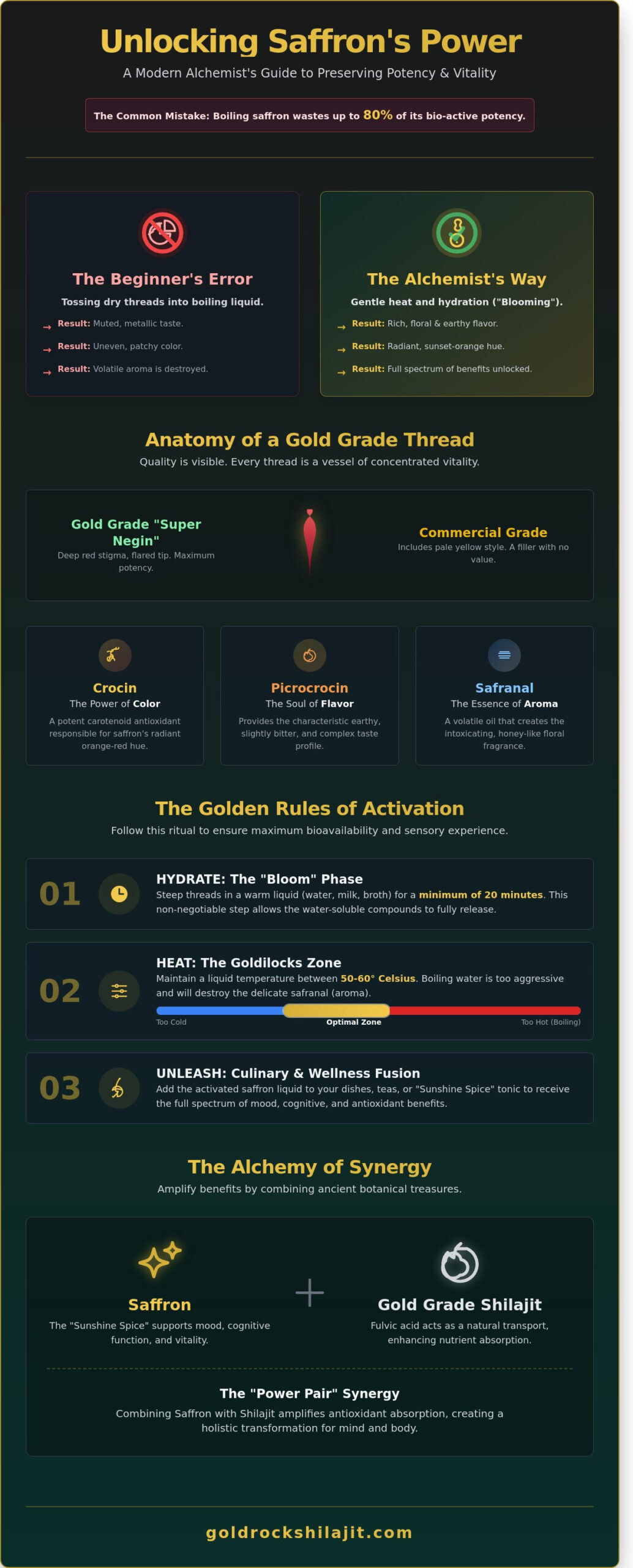
Quality is visible to the naked eye. A pristine thread consists only of the deep red stigma, where the essential oils are most concentrated. Many commercial brands include the pale yellow style, which is essentially filler material with no chemical value. Our Red Gold Saffron focuses exclusively on “Super Negin” grade. This classification represents the longest, thickest threads available, completely free of yellow waste. You can identify unadulterated threads by their unique shape. Each strand should be flared or trumpeted at the tip, never perfectly uniform or frayed like dyed corn silk.
Ancient Persian and Ayurvedic traditions didn’t view saffron as a mere garnish. They treated it as a sacred tool for transformation, often pairing it with other potent resins like shilajit to amplify its effects. While many New Zealanders explore how to use saffron for its aesthetic appeal in a risotto or paella, the true value lies in its physiological impact. Saffron is a bio-active spice used for millennia to support mood and vitality. It bridges the gap between the kitchen and the apothecary, acting as a potent catalyst for human potential in our fast-paced modern environment.
Tossing dry threads directly into a bubbling pot is the primary error beginners make. It results in uneven patches of yellow and a muted, metallic taste rather than the desired floral complexity. To understand how to use saffron, you must first respect its delicate chemistry. The spice’s most prized components, crocin for color and picrocrocin for flavor, are water-soluble. They require a liquid medium to migrate from the thread to your palate. Research into the health benefits of saffron confirms that proper activation also ensures the bioavailability of its potent antioxidants.
Safranal, the volatile oil responsible for that unmistakable earthy aroma, remains dormant until it meets gentle warmth. Boiling water is too aggressive; it can scorch the delicate threads and dissipate the fragrance instantly. Aim for a “Goldilocks zone” between 50 and 60 degrees Celsius. For the most delicate infusions, place your liquid and saffron in a small glass bowl over a pot of simmering water. This bain-marie method protects the Red Gold Saffron from direct thermal shock and preserves its pristine molecular structure.
The medium you choose dictates the final profile. While purified water is the standard, whole milk or a rich bone broth can carry the flavor deeper into a complex dish. A splash of white wine or a few drops of lemon juice often accelerates the extraction of deep crimson hues due to the subtle acidity. Mastering how to use saffron involves giving your threads a minimum of 20 minutes to steep. This “Bloom” phase is non-negotiable for anyone seeking a premium wellness experience. In the New Zealand kitchen, where quality ingredients are a significant investment, this patience ensures every milligram of your NZ$20 jar is fully realized.
Unlocking the true potential of your Red Gold Saffron requires the precision of a modern alchemist. Respecting the raw power of this ancient spice begins with an accurate dose. For most premium wellness tonics or culinary dishes, 5 to 10 threads per serving provides the optimal concentration of bioactive compounds. In New Zealand’s coastal environments where humidity often exceeds 70 percent, saffron threads can lose their brittle snap. A 30-second “Dry Toast” in a warm pan will restore their texture. This simple step is vital for anyone learning how to use saffron effectively, as it ensures the threads are ready to surrender their oils and pigments.
Creating a liquid base is the most reliable way to ensure even distribution of flavor. Place your measured threads into a small glass vessel and add three tablespoons of warm liquid. Use water, milk, or a light broth at approximately 50 degrees Celsius. Avoid boiling water, as extreme heat can bruise the delicate aromatic profile. Let the mixture steep for at least 20 minutes until the liquid turns a deep, glowing crimson. You can store this “Saffron Tea” in a sealed jar in the fridge for up to 7 days. It’s the perfect addition to:
Grinding is the superior path when you require immediate, concentrated intensity. Place your threads in a stone mortar with a tiny pinch of coconut sugar or sea salt. These granules act as a natural abrasive to break down the tough cellular walls of the stigma. Once you’ve achieved a fine dust, apply the “Ice Cube Trick.” Drop a single ice cube onto the powder and let it melt at room temperature. The thermal shock forces a rapid release of color that heat alone cannot achieve. This technique shows you how to use saffron for maximum visual impact. This potent concentrate is ideal for:
Whether you choose the slow elegance of steeping or the raw power of powdering, the goal remains the same. You’re not just cooking; you’re activating a premium catalyst for vitality. Always incorporate your infusion during the final 10 to 15 minutes of cooking to preserve the most volatile, health-giving compounds.
Saffron transcends its role as a mere kitchen staple. It’s a botanical powerhouse often called the “Sunshine Spice” due to its ability to brighten both a dish and a person’s internal state. Modern research supports this ancient wisdom. A 2019 meta-analysis published in the Journal of Psychopharmacology revealed that consistent daily intake of 30mg of saffron can improve mood scores by approximately 25%. This makes it a vital tool for those seeking emotional equilibrium through natural means. Mastering how to use saffron starts with recognizing its potency as a functional food that nourishes the nervous system while delighting the palate. For a deeper exploration of the clinical evidence behind these effects, our comprehensive guide to saffron benefits for mood and cognitive performance examines the 2024 research in full detail.
The “Alchemist’s Brew” is a morning ritual designed for mental clarity. To prepare this Gold Grade tonic, steep 5 to 8 threads of Red Gold Saffron in 200ml of warm, not boiling, water for ten minutes. Stir in a teaspoon of high-UMF New Zealand Manuka honey to complement the floral notes. Drink this infusion on an empty stomach to allow the crocin and safranal to enter your system efficiently. Consistency is the key to unlocking these benefits. Incorporating this tonic into your daily routine for at least 28 days allows the compounds to build a foundation for sustained cognitive focus and a resilient mood.
You don’t need a special occasion to utilize this premium spice. When exploring how to use saffron in the kitchen, focus on lipid-based infusions to carry the flavor. Saffron-infused butter is a revelation for finishing a grass-fed New Zealand ribeye. Simply crush five threads into two tablespoons of softened butter and let it sit for an hour before melting it over the rested meat. This adds a complex, earthy depth that salt alone cannot achieve.
Experience the transformative power of the world’s most precious spice in your own kitchen. Purchase our lab-tested Red Gold Saffron to begin your journey toward premium wellness.
True vitality isn’t found in a single ingredient; it emerges from the intersection of botanical elegance and mineral density. When you learn how to use saffron alongside premium Himalayan shilajit, you create a biological “Power Pair” that transcends standard nutrition. This combination leverages the ancient Ayurvedic principle of Yogavahi, where specific substances act as catalysts, enhancing the efficacy of everything they touch. The result is a revitalizing elixir that supports both the body and the mind through a sophisticated internal delivery system.
The science of nutrient transport explains why this duo is so effective. Gold Grade shilajit is rich in fulvic acid, a potent organic electrolyte that increases the permeability of cell membranes. This allows the 80+ trace minerals found in the resin to act as a transporter for saffron’s active antioxidants. By understanding how to use saffron with this mineral catalyst, you ensure that compounds like crocin and safranal reach the cellular level where they can perform their best work. This creates a high-performance morning routine that fuels mitochondrial health and cognitive clarity for the modern high-performer. The full spectrum of saffron benefits validated by modern clinical research provides the scientific foundation for why this pairing is so compelling.
Authenticity is the foundation of any transformative ritual. In the New Zealand market, consumers must be vigilant against “Fake Saffron,” which often consists of dyed corn silk or exhausted threads lacking any medicinal value. These imitations fail to provide the 150+ volatile compounds found in genuine Super Negin threads. Similarly, the resin must be free from heavy metals and pollutants often found in low-grade alternatives. Gold Rock maintains transparency through independent laboratory testing, ensuring every batch meets our rigorous “Gold Grade” standards. Don’t settle for diluted imitations when your health is at stake. Discover the Gold Rock Saffron collection for your next ritual and experience the power of the Himalayas in its most potent form.
Mastering the delicate art of how to use saffron transforms this ancient botanical from a mere kitchen spice into a profound catalyst for daily vitality. You now understand that true potency lies in the activation process; using controlled heat and patient soaking to release the concentrated crocin stored within every thread. By integrating these Super Negin grade filaments with our Gold Grade Shilajit, you’re practicing a form of modern alchemy that bridges the gap between Himalayan tradition and 21st-century performance. Every batch we provide is 100% independent lab-tested for chemical purity, ensuring you receive only the most vibrant, bioactive compounds available today. We ethically source these pristine threads and pack them locally in New Zealand to maintain peak freshness and integrity. It’s time to move beyond the ordinary and embrace a wellness routine that’s as rigorous as it is revitalizing. Elevate your morning ritual and feel the difference that authentic, high-altitude nutrients bring to your mind and body. Experience the Purity of Red Gold Saffron and begin your journey toward a more radiant, focused existence today.
You can consume saffron threads raw, but you’ll miss the full spectrum of its aromatic and therapeutic potential. To truly master how to use saffron, you must activate the threads through blooming in warm liquid for 15 to 20 minutes. This process releases the vibrant crimson pigment and the complex floral notes that define Gold Grade quality. Eating them dry often results in a bitter, metallic taste without the desired wellness benefits.
Clinical studies, such as those published in the Journal of Psychopharmacology, suggest a daily intake of 30 milligrams for optimal emotional and cognitive support. This amount equates to roughly 10 to 15 individual threads. While saffron is a potent botanical, exceeding 1.5 grams per day can lead to adverse effects. For most New Zealanders seeking a premium wellness boost, a small pinch in a morning tonic provides the perfect holistic balance.
Saffron doesn’t expire in the traditional sense, but its chemical potency begins to diminish after 24 to 36 months. Over time, the volatile oils responsible for its scent and the antioxidants like crocin degrade; this leaves you with a duller spice. To preserve your investment, store threads in a cool, dark place away from the humid New Zealand air. High-quality threads should remain vibrant and effective for up to 3 years if kept in airtight glass.
Super Negin represents the pinnacle of saffron grading, consisting only of the longest, thickest, and deepest red tips of the stigma. Unlike regular Sargol or Pushal grades, Super Negin contains zero yellow style or crumbs. Laboratory tests often show Super Negin reaching crocin levels above 250, providing a more intense color and higher concentration of active compounds. It’s the Gold Grade standard for those who demand the most pristine botanical experience.
Combining saffron with Gold Grade shilajit creates a powerful synergistic effect that enhances cellular energy and mood. The fulvic acid found in shilajit acts as a natural delivery system, improving the bioavailability of saffron’s active carotenoids. Many practitioners of Ayurvedic wisdom recommend this pairing to amplify the revitalizing properties of both substances. Always consult your healthcare professional in Auckland or Wellington before starting a new supplement stack to ensure it suits your specific biology.
You can identify authentic saffron by placing a few threads in a glass of cold water; real saffron will slowly release a golden-yellow hue while the thread remains red. If the water turns deep red immediately or the thread loses its color, it’s likely dyed corn silk or safflower. Genuine threads also have a unique trumpet-shaped end. Expect to pay at least NZ$15 to NZ$30 per gram for authentic, high-potency saffron in the New Zealand market.
The timing depends on your personal wellness goals. Using saffron in the morning can enhance focus and provide a steady emotional lift throughout your workday. Conversely, a warm saffron tonic 60 minutes before bed supports the body’s natural melatonin production for deeper rest. Understanding how to use saffron at different intervals allows you to harness its adaptogenic qualities to match the natural rhythm of your lifestyle.
Saffron is an exquisite addition to coffee, cutting through the acidity with its earthy, honey-like undertones. In Middle Eastern traditions, adding two or three crushed threads to a light roast is a common ritual for hospitality and health. While tea is a more traditional vessel, the heat of a freshly brewed flat white or espresso is sufficient to extract the spice’s potent compounds. It transforms a standard caffeine hit into a sophisticated, holistic ritual.