
That pitch-black jar on your shelf might actually be a shadow of the truth rather than the potent catalyst you seek. You’ve likely spent hours scrolling through New Zealand wellness forums, feeling that familiar sting of skepticism as you compare a dozen different brands. It’s frustrating when one jar looks like liquid obsidian while another appears earthy brown; leaving you to wonder if you’re investing in your vitality or just a clever marketing facade. Understanding exactly what color should pure shilajit be is the first step in moving past the fear of heavy metal contamination and low-grade fillers.
We agree that your health shouldn’t be a guessing game based on slick labels. This guide provides a clear visual rubric to identify genuine Gold Grade shilajit, ensuring you possess the confidence to distinguish pristine resin from inferior imitations. You’ll discover the scientific connection between mineral density and visual hue, as we reveal how the 85 trace minerals found in authentic resin create a specific light-refractive quality that validates absolute purity and informs the Modern Alchemist’s choice.
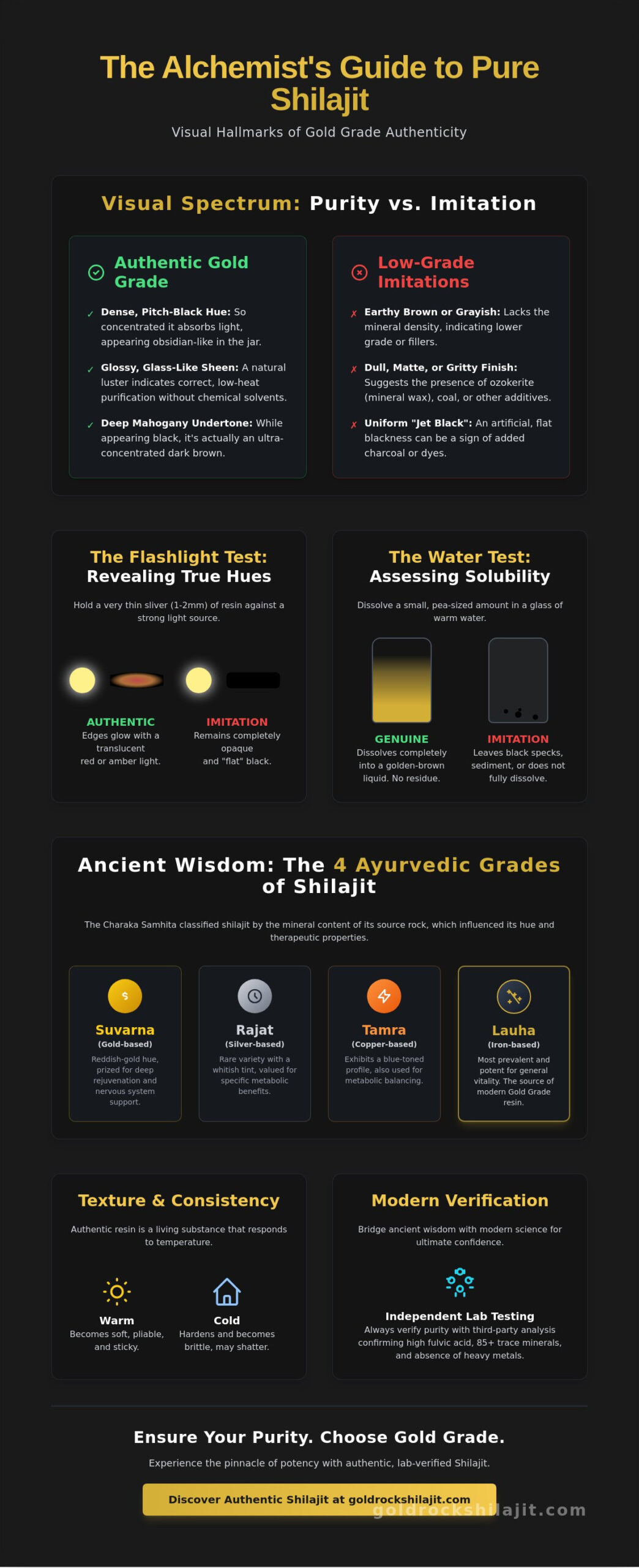
Authenticity begins with a visual encounter. When you first open a jar of premium resin, the substance should present itself as a dense, pitch-black or dark-ebony mass. This intense coloration serves as your first line of defense against low-grade imitations like ozokerite (a paraffin-based mineral wax) or coal-based substitutes often sold at suspicious discounts. Understanding what color should pure shilajit be is the primary skill of the Modern Alchemist, as the visual profile reveals the geological history of the resin itself.
The true hallmark of a Gold Grade extract is its optical density. High-quality resin is so concentrated with fulvic acid and trace minerals that it absorbs almost all visible light, creating an appearance of total darkness. Yet, this isn’t a “flat” or “matte” black. A pristine resin will always exhibit a glossy, glass-like sheen on its surface. This luster indicates that the resin has been purified correctly without the use of chemical solvents or excessive heat, which can dull the natural brilliance of the minerals. For those seeking a comprehensive overview of shilajit, its historical classification often hinges on these specific physical characteristics that separate therapeutic grade from common mountain silt.
While the resin looks undeniably black in the jar, its true identity is more complex. Pure shilajit is actually an ultra-concentrated brown; it only appears black due to the sheer density of its 85+ trace minerals. The specific shade is influenced by the dominant mineral type, such as iron-rich Lauha shilajit or the prized gold-rich Suvarna varieties. As the resin undergoes natural oxidation, it deepens in tone. It’s best to define the color as a deep mahogany that reaches near-total opacity. At Gold Rock, we maintain that our pure shilajit NZ standards must reflect this natural depth rather than a manufactured, uniform blackness.
To confirm you aren’t dealing with charcoal additives or inorganic fillers, you can perform a simple light test. Take a very thin sliver of the resin, approximately 1-2mm thick, and hold it directly against a strong light source or a high-powered torch. If the resin is authentic, you’ll see translucent red or amber glowing at the very edges of the sample. These warm, ruby-like tones are the signature of concentrated humic substances. If the sample remains completely opaque and “flat” black even at its thinnest point, it’s a warning sign that the product may contain powdered coal or artificial dyes. This transparency check ensures your daily ritual is powered by the heart of the Himalayas, not industrial byproducts.
Centuries ago, the Charaka Samhita, a foundational text of Ayurveda, identified four distinct varieties of shilajit. These weren’t just random categories; they were based on the specific mineral-rich rocks from which the resin exuded. When asking what color should pure shilajit be, it’s vital to understand that ancient sages looked at the source. They observed the mountains “sweating” different hues depending on the geological composition. This ancient wisdom aligns with our modern understanding of the molecular composition of shilajit, which varies based on its botanical and mineral origins. At Gold Rock Shilajit, we honor this heritage by selecting only the most potent geological sources.
The Charaka Samhita describes four primary types based on the minerals dominant in the rock:
While these colors describe the rock source, the purified resin itself undergoes a transformation. The final product’s appearance is a direct reflection of its mineral density and the traditional purification methods used to remove impurities while preserving life-force energy.
In the context of 2026 wellness standards, “Gold Grade” represents more than just a color. It signifies the highest concentration of fulvic acid and trace minerals available. To determine what color should pure shilajit be at its peak, one must look for a deep, obsidian-like black that reveals amber translucency when stretched thin. This specific profile only occurs when the resin is harvested at altitudes exceeding 16,000 feet. At these heights, the extreme pressure and pristine environment create a substance of unparalleled purity.
New Zealanders seeking genuine performance enhancement often prioritize this grade because it bypasses the diluted, low-altitude alternatives found in bargain aisles. The slow, natural formation process ensures a bioavailable complex that mirrors the earth’s own resilience. You can learn more about our rigorous selection process and why buy from Gold Rock to ensure you’re receiving the highest vibration of this ancient earth-medicine. If you’re ready to elevate your daily ritual, consider starting with our Gold Grade resin for a truly transformative experience.
To understand the essence of this ancient resin, you must observe its interaction with the elements. While it sits as a dark, dense mass in its jar, the true identity of the substance emerges only when it meets water. This is the ultimate ritual for any New Zealand wellness seeker looking to verify their investment. The transformation is more than just a chemical reaction; it’s a visual confirmation of the resin’s journey from the high-altitude rock faces of the Himalayas to your cup.
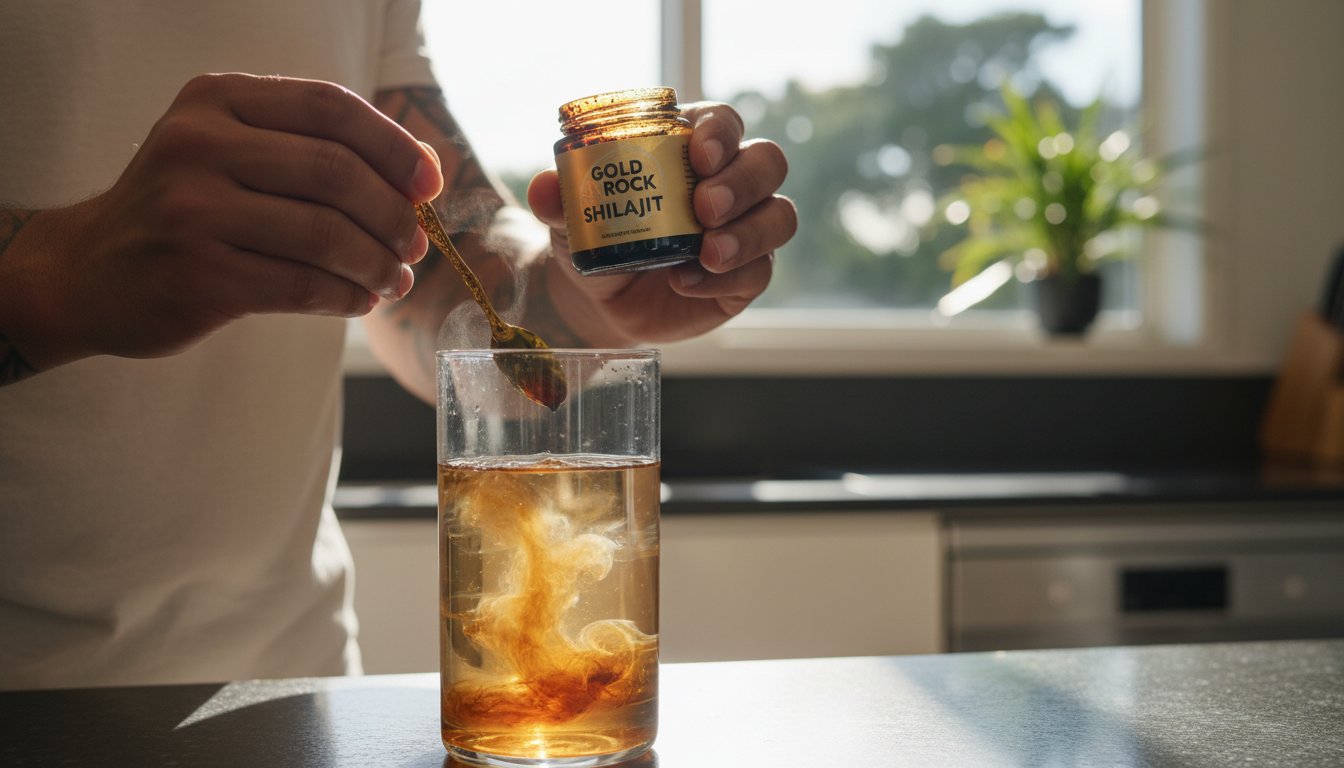
When you introduce Gold Grade resin to warm, purified water, the reaction should be deliberate and graceful. A pristine specimen doesn’t just sink or cloud the water instantly. Instead, it begins to “weep.” You’ll see delicate, golden-brown ribbons spiraling downward, coloring the liquid without any mechanical stirring. This transparency is vital. A high-quality solution remains clear enough to see through, even as the color deepens. If the water becomes turbid or develops a “muddy” appearance, the purity is compromised.
Patience is a virtue of the Modern Alchemist. To perform the solubility test correctly, follow these steps:
The final result provides the definitive answer to what color should pure shilajit be when diluted. It should resemble a vibrant, sun-steeped tea or a clear piece of amber held up to the light. Don’t trust liquids that turn an “ink-black” or charcoal color. Such shades often suggest the inclusion of artificial dyes, soot, or even heavy metal contaminants that have no place in a premium wellness routine. Authentic shilajit should color the water like a strong sun-steeped tea, never like black ink.
Authenticity leaves no room for grit. When you finish your tonic, the glass should be as clean as when you started. Pure shilajit is entirely water-soluble because it consists of organic plant matter and minerals refined over centuries. If you notice a gritty residue at the base of your cup or an “oil slick” shimmering on the surface, you’ve encountered a counterfeit. These residues are often powdered rock, soil, or cheap fillers used to bulk out inferior products.
Another sign of manipulation is how the substance interacts with surfaces. While the concentrated resin is dark, the solution shouldn’t permanently stain your glassware or skin like a synthetic pigment. Authentic Gold Rock Shilajit follows the “clean break” rule. It provides a deep, translucent amber glow that signifies a high concentration of fulvic acid without the presence of unwanted additives. This clarity is your guarantee that you are consuming a product that respects both Ayurvedic wisdom and modern laboratory standards.
While understanding what color should pure shilajit be provides a vital visual baseline, the true essence of the substance lies in its physical behavior. Color can be mimicked by industrial dyes or concentrated vegetable extracts, but the structural “soul” of a Gold Grade resin is nearly impossible to replicate. To the Modern Alchemist, the resin isn’t a static substance. It’s a dynamic, temperature-responsive entity that reflects its high mineral density and ancient origin through movement and touch.
Pure shilajit resin possesses a living nature that reacts to the environment. When you hold a small portion in your palm, the natural warmth of your skin should transform it into a soft, pliable state within 60 seconds. It becomes workable, almost like high-quality modeling clay. Conversely, placing the jar in a New Zealand refrigerator should turn the resin into a solid, brittle mass. If your resin remains perpetually soft or “goopy” regardless of the climate, it likely contains additives like glycerin or excess water to keep it manageable. Authentic shilajit doesn’t compromise its form for consumer convenience; it follows the laws of nature.
Two distinct tactile tests help confirm authenticity. The “Snap Test” requires the resin to be chilled. When struck or dropped on a hard surface, it should shatter like glass, revealing a polished, obsidian-like internal surface. This glassy fracture is a hallmark of high-purity minerals. The second test is the “Pull Test,” performed at room temperature. As you pull a piece of resin apart, it should stretch into fine, dark threads that eventually break and recoil slightly. This natural tackiness distinguishes it from simple rock or hardened sugar syrup, which often feels grainy or breaks with a blunt, dull edge. When asking what color should pure shilajit be during these tests, look for that consistent, deep black-brown sheen even at the point of the break.
Many New Zealanders encounter dry powders or capsules that appear light brown or grey. These formats rarely match the potency of a pure resin. Processing shilajit into a stable powder often requires high-heat drying or the addition of flow agents like maltodextrin. These industrial methods strip away the volatile organic compounds that define its efficacy. When comparing Shilajit Resin vs Drops, the resin remains the gold standard for those seeking a premium catalyst for human potential.
Experience the power of unadulterated Himalayan minerals. Secure your jar of authentic Gold Grade resin today.
Gold Rock Shilajit stands as the definitive bridge between the mystical past and the rigorous safety requirements of the 21st century. While ancient Ayurvedic texts describe the “Gold Grade” as the pinnacle of vitality, we ensure that every jar delivered to your door meets the highest safety benchmarks available in New Zealand. When people ask what color should pure shilajit be, they’re often looking for a visual shortcut to quality. However, the true standard lies in the synergy of that deep, obsidian hue and verified laboratory results. We don’t just offer a supplement; we provide a premium catalyst for human potential that respects its geological heritage.
A Certificate of Analysis (COA) is more than just paperwork; it’s your guarantee that the resin’s dark pigment isn’t masking impurities. While the eye sees a rich, glass-like texture, our independent lab testing looks deeper to confirm the absence of heavy metals like lead or arsenic. This transparency is why Gold Rock is trusted by high-performance individuals across Aotearoa. The resin’s unique optical properties come from a complex matrix of 85+ trace minerals and high fulvic acid content. These elements work together to create a substance that’s both ancient and biologically optimized. If you’ve got more questions about our sourcing or safety standards, visit our Gold Rock FAQs.
If you’re new to this powerful resin, starting your journey is a simple yet profound shift in your daily routine. We recommend beginning with a pea-sized portion, roughly 300mg to 500mg, dissolved in warm, non-chlorinated water or your favourite herbal tea. You’ll quickly find that purity has a look, a feel, and a signature power that sets it apart from mass-produced alternatives. Identifying what color should pure shilajit be is only the beginning of recognizing true quality.
Our 15g Gold Rock Resin represents the gold standard of what shilajit can be. It’s meticulously sundried, never boiled, to preserve the delicate bio-active compounds that fuel your vitality. By choosing a product that respects both the source and the science, you aren’t just buying a resin; you’re investing in a legacy of wellness. Ready to transform your daily ritual? Shop the Gold Rock Collection today and feel the resonance of the Himalayas in every drop.
Discerning the quality of this ancient resin is a skill that bridges the gap between traditional wisdom and modern performance. You’ve learned that identifying what color should pure shilajit be involves looking for a pitch-black, glass-like luster that transitions into a warm, golden-brown hue once it’s dissolved. True Gold Grade quality is defined by this visual integrity and a texture that remains pliable at room temperature, signaling a product free from common fillers or industrial additives. It’s the difference between a simple supplement and a premium catalyst for your daily health.
Gold Rock Shilajit is harvested at altitudes above 16,000 feet in the pristine Himalayan peaks to ensure maximum potency. Every batch contains over 80 essential trace minerals and is independent lab tested for purity, providing New Zealanders with a product that’s as safe as it is powerful. Don’t settle for anything less than the earth’s most concentrated mineral source. It’s time to experience the revitalizing energy of the mountains in its most authentic form.
Unlock Your Potential with Authentic Gold Grade Shilajit Resin
Your journey toward peak vitality begins with the clarity of true mountain gold.
Authentic, high-quality resin typically appears as a deep, pitch-black substance in its concentrated form. While it looks black in the jar, it’s actually an incredibly dense shade of brown. This intense pigmentation is a result of centuries of compressed organic matter and high concentrations of minerals. If you spread a small amount onto a white surface, you’ll notice the underlying dark mahogany tones that define its true character.
Your shilajit looks dark brown because it’s being viewed in a thin layer or under direct light. Pure resin contains over 60 percent fulvic acid, which naturally carries a deep amber or reddish-brown hue when it’s not in a thick mass. This translucency is a sign of a clean, well-purified product. If the resin remains opaque even when stretched thin, it might contain unwanted fillers or rock dust.
No, light grey or tan colors indicate that the product is either raw, unrefined rock or a heavily diluted powder. True purification removes up to 70 percent of the original mountain debris to isolate the potent resin. In the New Zealand market, you should avoid any “shilajit” that looks like light clay. These products often lack the essential mineral profile and haven’t reached the Gold Grade standard required for human consumption.
When you’re testing what color should pure shilajit be in liquid, look for a clear, golden-amber or reddish-brown hue. A 200mg portion should dissolve completely in warm water within 3 minutes without leaving any sediment. The resulting tonic should look like a dark tea. If the water turns cloudy or a murky grey, it suggests the presence of clay, heavy metals, or supplemental fillers that shouldn’t be there.
Pure shilajit is a remarkably stable substance that shouldn’t change color if you store it in a cool, dark place. Scientific observations show that resin kept in airtight violet glass can maintain its chemical integrity for over 3,650 days. If you notice the surface turning white or grey, it’s usually due to moisture crystallization or improper storage. Always ensure the lid is tight to preserve the “Modern Alchemist” quality of your supplement.
No, “Gold Grade” refers to the traditional Ayurvedic classification of the source rock, not the color of the final resin. This highest tier of shilajit is harvested from gold-bearing rocks found above 15,000 feet in the Himalayas. While the rock itself may have golden streaks, the extracted resin is always a deep, lustrous black. This grade is prized for having the most balanced profile of minerals and fulvic acid for human vitality.
White spots are typically mineral salts that have precipitated out of the resin due to changes in temperature or humidity. This often occurs when the moisture content of the resin sits below 15 percent. While these crystals are generally harmless minerals, you must distinguish them from mold. If the spots are fuzzy or have a structural growth, discard the product immediately. Premium Gold Grade resins are lab-tested to ensure they meet strict New Zealand safety standards.
You can identify artificial dyes by performing a simple water solubility test. Pure resin dissolves uniformly, creating a translucent glow. If you see dark streaks swirling in the water or if the substance stains your skin like ink, it likely contains coal dust or food coloring. Authentic shilajit won’t leave a permanent stain on your hands; it should wash off easily with plain water, leaving no chemical residue behind.