
Buying a cheap supplement often costs you more in lost vitality than the NZ$20 you saved at the checkout. If you’ve spent the last 12 months cycling through diluted capsules and sugary energy drops without feeling a shift in your baseline fatigue, you’re not alone. You’re likely asking: is shilajit worth the money 2026? The reality is that the market is currently saturated with low-grade imitations that lack the essential fulvic acid concentrations required for true cellular rejuvenation. These products mimic the appearance of the earth’s most potent mineral pitch but fail to provide the 85+ trace minerals your body craves.
You deserve a wellness ritual that actually delivers on its ancient promises. We’ll show you how to identify authentic, Himalayan-sourced resin that remains the gold standard of Ayurvedic wisdom. This guide provides a definitive cost-benefit analysis of Gold Grade shilajit, helping you distinguish between laboratory-validated purity and the mass-produced fillers that dominate retail shelves. We’ll examine the specific markers of high-potency resin so you can invest in your long-term health with total confidence.
By 2026, the global wellness economy is projected to exceed NZ$11 trillion, marking a shift where high-performance supplements are no longer luxury extras but essential tools for cognitive and physical longevity. Within this climate, Shilajit has completed its transition from a hidden Himalayan secret to a foundational pillar of modern biohacking. Discerning consumers in New Zealand now ask a critical question: is shilajit worth the money 2026? The answer lies in the distinction between a simple retail purchase and a calculated investment in human potential.
The “worth” of a premium resin isn’t measured by its price per gram, but by its ability to resolve the pervasive brain fog and vitality deficits that characterize 21st-century life. When you choose a Gold Grade resin, you’re paying for the elimination of biological friction. Market saturation in 2025 led to a 45% increase in diluted products, making it vital to understand that a lower price point often signals a compromise in the very molecular integrity you seek to harness.
Modern Alchemists view their supplement protocol as a closed-loop system. If a substance doesn’t provide a measurable return on clarity, recovery speed, or hormonal balance, it’s a wasted expense. Because of the rise in counterfeit resins, determining if is shilajit worth the money 2026 requires looking at laboratory transparency and the geological heritage of the source. True value is found where ancient geological pressure meets modern filtration standards.
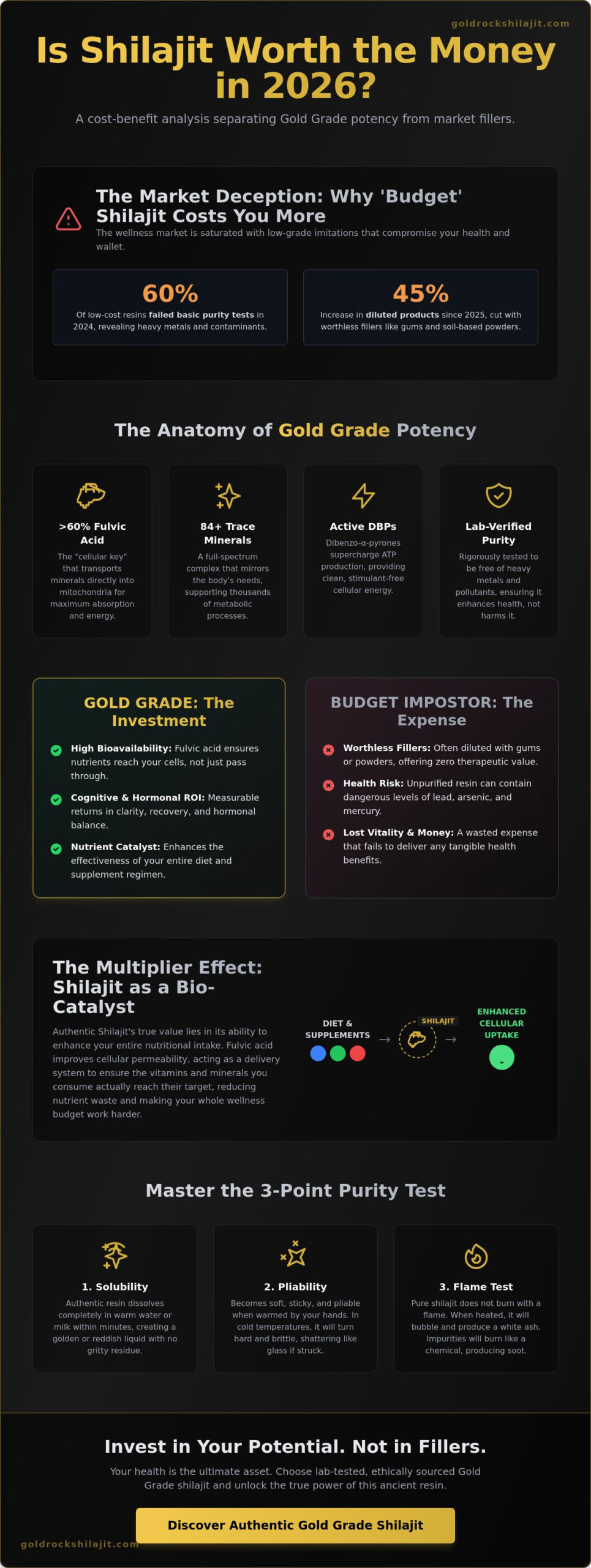
Cheap shilajit is often a financial trap. To lower costs, manufacturers frequently cut the resin with fulvic acid powders derived from soil, or worse, use gums and maltodextrin to mimic the texture of authentic resin. These fillers offer zero therapeutic value. Even more concerning is the risk of heavy metals; unpurified “raw” shilajit can contain high levels of lead, arsenic, and mercury. In 2024, a study of low-cost resins found that 60% failed basic purity tests, proving that a “bargain” price is often the first red flag of a product that could actively harm your health rather than enhance it.
The true financial genius of shilajit lies in its role as a biological door-opener. High concentrations of fulvic acid act as a natural chelator, significantly increasing the bioavailability of your entire diet and supplement stack. By improving cellular membrane permeability, it ensures that the expensive vitamins and minerals you consume actually reach their target. This makes your entire wellness budget “worth more” by reducing nutrient waste. Shilajit is a biomineral catalyst that bridges ancient wisdom and modern biohacking. This unique property ensures that every NZ$ spent on nutrition works harder for your physiology.
To understand why discerning New Zealanders are investing in this ancient resin, we must look past the marketing and into the molecular architecture. When asking is shilajit worth the money 2026, the answer lies in the synergy of its components. True Gold Grade shilajit isn’t just a mineral supplement; it’s a bio-available delivery system. Standard industrial extracts often use harsh heat that degrades these delicate compounds, whereas authentic resin maintains the structural integrity of its most vital assets. When evaluating if is shilajit worth the money 2026, the focus must shift from the price per gram to the concentration of active metabolites that drive real physiological change.
Fulvic acid acts as the ultimate cellular key. It’s a low-molecular-weight organic acid that carries minerals directly into the mitochondria, the powerhouses of your cells. For a product to be effective, you should demand a minimum of 60% fulvic acid concentration. Without this high saturation, the 84+ trace minerals found in the resin can’t be efficiently absorbed. This scientific reality is what shilajit does to bridge the gap between ingestion and actual cellular utilization. Authentic Gold Grade resin ensures these minerals don’t just pass through your system but are actively transported to where they’re needed most.
The presence of dibenzo-alpha-pyrones (DBPs) is what elevates shilajit from a simple nutrient source to a performance catalyst. These compounds work alongside fulvic acid to supercharge ATP production, providing a sustained energy lift that doesn’t rely on caffeine or stimulants. This isn’t about the quantity of one single mineral, but the diversity of the 84+ elements that mirror the human body’s own requirements. In the NZ wellness market, where purity is paramount, finding a resin that preserves these DBPs is the difference between a placebo and a potent health investment.
The return on investment for your health becomes clear when looking at long-term vitality. A scientific review of Shilajit highlights its role in supporting cognitive function and combating the oxidative stress that leads to brain fog. For men, the research into testosterone support is particularly compelling, showing significant improvements in total testosterone levels after 90 days of consistent use. This compounding interest effect means the benefits grow more profound the longer you integrate it into your routine. Consistent use over a three-month period allows the trace minerals to re-mineralize the body, creating a foundation for peak performance. If you’re looking to optimize your daily output, you can experience the Gold Grade difference and see how authentic resin transforms your baseline energy.
True value isn’t found on a price tag; it’s measured in cellular resonance. When discerning consumers ask if is shilajit worth the money 2026, they must look past the initial investment and toward the actual biological delivery. A 15g jar of Gold Grade resin might appear more expensive than a bulk bottle of capsules, yet the economics of “active” value tell a different story. Most mass-marketed shilajit powders are heavily processed, often losing their ionic structure during high-heat dehydration.
The “Filler Factor” is a silent drain on your wallet. Many budget brands utilize maltodextrin or rice flour to prevent clumping in capsules. These additives serve no nutritional purpose and dilute the fulvic acid content. When you buy a cheap NZ$30 alternative, you’re often paying for 40 percent inactive material. In contrast, pure resin is 100 percent active. You aren’t just buying weight; you’re buying the potency of 85 trace minerals in their most bioavailable state.
Consider the daily investment. A premium jar of Gold Rock Shilajit typically provides a 60-day supply of revitalization. This breaks down to less than NZ$2.00 per day. Compare this to the NZ$5.50 or NZ$6.00 you might spend on a daily flat white in Auckland or Wellington. While the coffee provides a fleeting, jittery spike, the shilajit offers a foundational shift in mitochondrial function. From a pure productivity standpoint, the ROI on sustained energy and mental clarity far outweighs the cost of a temporary caffeine fix.
Resin remains the gold standard of Ayurvedic wisdom. It is the most potent, traditional form, boasting the highest mineral density and preserving the complex molecular structure of the Himalayan earth. For those seeking modern convenience without sacrificing integrity, our Shilajit Resin vs. Drops analysis highlights how liquid formats offer rapid absorption for high-performance lifestyles. We don’t sell capsules. The industrial drying and capping process often compromises the life force of the resin, turning a vibrant catalyst into a stagnant powder.
There is no greater waste of money than a product that doesn’t work. Buying a low-grade supplement is a “sunk cost” because the body cannot effectively transport the minerals across the cell membrane without sufficient fulvic acid. To truly determine if is shilajit worth the money 2026, calculate your personal ROI through the lens of performance. If a premium resin increases your focus by 20 percent or reduces your recovery time after a workout, the gain in human capital is immeasurable. High-grade shilajit isn’t an expense; it’s a strategic asset for your biological architecture.
The market in 2026 is flooded with mass-produced imitations that promise ancient wisdom but deliver modern fillers. If you’re asking is shilajit worth the money 2026, the answer depends entirely on your ability to distinguish a geological miracle from a dangerous counterfeit. Authentic Gold Grade resin is rare; it’s harvested from the heart of the Himalayas at altitudes above 16,000 feet. When you encounter low prices that seem too good to be true, you’re likely looking at ozokerite, a petroleum-based substance, or resin cut with maltodextrin.
You don’t need a laboratory to perform an initial screening. Every serious investor in their health should use the three-point purity test:
Red flags often hide in plain sight. Avoid products with a harsh, coal-like chemical smell; authentic resin has a complex, earthy aroma with hints of smoked stone. A sandy or grainy texture indicates poor filtration or the addition of soil to increase weight. If your resin remains runny in the fridge, it’s been over-diluted with water or glycerine, destroying its concentrated value.
In the New Zealand market, transparency is the only currency that matters. A Certificate of Analysis (COA) isn’t just paperwork; it’s your guarantee of safety. You must look for independent testing that verifies fulvic acid levels are at least 60 percent and confirms that heavy metals like lead, arsenic, and mercury fall well below safety thresholds. New Zealand-based testing adds an extra layer of security, ensuring the product complies with local standards. Purity is the foundation of potency; without a lab report, you are buying a mystery.
The vessel is as important as the resin itself. Plastic packaging is an immediate disqualifier for a premium product. Shilajit is a potent natural solvent that can leach phthalates and microplastics from low-grade containers, contaminating your supplement. High-end Gold Grade resins are always housed in miron glass or biophotonic jars. This specialized glass blocks the aging rays of the visible light spectrum while allowing rejuvenating violet and infrared light to penetrate, preserving the resin’s bio-active energy. To understand how we maintain these exacting standards, explore Why Buy From Gold Rock and see why packaging is never an afterthought.
Don’t settle for compromised quality when your vitality is on the line. Experience the power of authentic Gold Grade resin today.
Choosing a health investment in 2026 requires more than a casual glance at a price tag. It demands an understanding of the journey from the high-altitude peaks to your daily routine. When you ask is shilajit worth the money 2026, you aren’t just buying a resin; you’re securing a biological edge. Gold Rock Shilajit provides a tiered approach with 15g, 30g, and 60g options, ensuring that whether you’re a curious newcomer or a dedicated practitioner, the value remains consistent. This isn’t a mass-produced commodity. It’s a concentrated geological treasure refined for the modern high-performer.
Quality in this market isn’t accidental. Our Gold Grade guarantee signifies a commitment to authenticity that few can match. Every batch is ethically sourced from the most pristine Himalayan altitudes, sundried to preserve delicate bio-actives, and subjected to independent laboratory testing. We remove the guesswork. By prioritizing these rigorous standards, we ensure that every gram delivered to your door in New Zealand contains the full spectrum of fulvic acid and trace minerals your body craves.
We operate as a Modern Alchemist, bridging the gap between ancient Ayurvedic wisdom and contemporary safety protocols. Our resin contains no fillers and no shortcuts. We focus on a slow, natural purification process that maintains the integrity of the 85+ minerals found within the raw material. This dedication supports sustainable energy and holistic wellness without the crashes associated with synthetic stimulants. You can Shop Gold Rock Shilajit Resin to experience a product that respects both the earth and your physiology.
Logistics play a vital role in the value equation for New Zealanders. We’ve eliminated the frustration of international shipping delays and customs uncertainties. Our New Zealand-based distribution ensures your resin arrives fresh and potent. By keeping stock local, we maintain a shorter supply chain, which preserves the vibrational and chemical integrity of the product. You won’t wait weeks for a package to cross the Pacific; you get premium vitality delivered with local efficiency.
Selecting the right size is the first move in your wellness strategy. For those questioning is shilajit worth the money 2026, the 15g jar serves as the perfect entry point. It allows you to feel the cognitive and physical shifts without a massive upfront commitment. However, experienced users often pivot to the 60g jar. This larger size offers the best price-per-gram ratio and ensures you have a consistent three-month supply for deep mineral replenishment. Consistency is the secret to transformation.
The final verdict is clear. If you value purity over the lowest possible price, Gold Rock Shilajit is a mandatory addition to your cabinet. Cheap alternatives often contain heavy metals or soil contaminants that negate any perceived savings. Investing in Gold Grade resin means you’re paying for safety, potency, and peace of mind. Unlock your potential with Gold Rock Shilajit today.
Navigating the wellness landscape in New Zealand requires a discerning eye for authenticity over mere convenience. When asking is shilajit worth the money 2026, the answer lies in the intersection of ancient geological slow-cooking and rigorous modern validation. True value isn’t found in a low price per gram; it’s found in the 84+ essential minerals and the high fulvic acid content that ensures maximum bioavailability. By 2026, the savvy consumer knows that cheap, mass-produced powders often hide heavy metals or lack the life-force of the original source. Our Gold Grade resin is ethically sourced from the pristine heights of the Himalayas, ensuring you receive a product that respects both the earth and your biology. Every batch is independent lab tested for purity, providing the transparency that modern high-performers demand. It’s time to move beyond the frantic cycle of discount retail and embrace a more measured, luxurious approach to your health. Your body deserves a catalyst that matches your ambition.
Invest in your peak performance with our Gold Grade Shilajit Resin
Step into your most vibrant self with the confidence that only the purest earth can provide.
Shilajit provides a level of cellular absorption that a standard multivitamin cannot match. While synthetic vitamins often pass through the body with absorption rates as low as 15%, the fulvic acid in our Gold Grade resin acts as a natural chelate. This ensures that the 84 trace minerals reach your mitochondria directly. When you evaluate if is shilajit worth the money 2026, the answer lies in this superior bioavailability.
A 15g jar of premium resin typically lasts between 30 and 50 days depending on your personal dosage. Most users find a pea-sized portion of 300mg to 500mg daily is the ideal catalyst for their routine. This measured pace means your investment in Gold Grade quality breaks down to a manageable daily cost. It’s a small price for a potent, ancient elixir that bridges the gap between modern performance and ancestral vitality.
Cheap capsules rarely offer the same transformative power as authentic resin because they’re often diluted with fillers like rice flour. A 2023 market analysis revealed that nearly 60% of budget shilajit products in New Zealand contained less than 10% fulvic acid. These powders often lose their volatile oils during the high-heat drying process. Choosing Gold Grade resin ensures you’re receiving a living, potent substance rather than a processed, inert byproduct.
You can verify authenticity through three specific physical tests: solubility, flame, and temperature. Real Gold Grade resin dissolves entirely in warm water within three minutes without leaving any gritty residue behind. It won’t light on fire like coal; instead, it will bubble and turn into a white ash. At cold temperatures, it becomes brittle and hard. If your product stays soft in the fridge, it’s likely mixed with honey or syrups.
Consistent daily use for 30 days typically leads to a noticeable shift in your baseline energy and mental resilience. Research published in the Journal of Ethnopharmacology indicates that the body begins to optimize its ATP production after 21 days of consistent supplementation. You’ll likely notice that the mid-afternoon fatigue common in high-pressure NZ workplaces starts to dissipate. It’s a cumulative process where the resin slowly rebuilds your internal reserves and fortifies your biological foundation.
Himalayan resin commands a higher price because it’s wild-crafted at altitudes exceeding 4,500 metres. These extreme conditions prevent contamination and ensure a higher concentration of dibenzo-alpha-pyrones. Harvesting in these remote regions requires specialized local knowledge and significant physical labor. This pristine sourcing makes the product more expensive than lowland varieties, but it guarantees a level of purity and potency that defines the Gold Grade standard for the discerning buyer in 2026.
Even with a perfect diet, you’re likely missing the trace minerals that shilajit provides due to global soil depletion. A 2024 environmental report showed that NZ agricultural soils have lost roughly 25% of their mineral density over the last several decades. Shilajit acts as a nutritional insurance policy that fills these specific gaps. When asking if is shilajit worth the money 2026, consider that it provides rare elements like strontium and manganese no longer abundant in produce.
Authentic shilajit resin is a stable substance that won’t expire if you keep it in a cool, dark place. Because it’s a product of centuries of geological compression, it’s naturally resistant to bacterial growth and oxidation. We provide a two-year “best before” date to comply with New Zealand food safety regulations, but the resin’s elemental value remains intact for much longer. Just ensure the lid is sealed tightly to prevent the resin from drying out over time.