
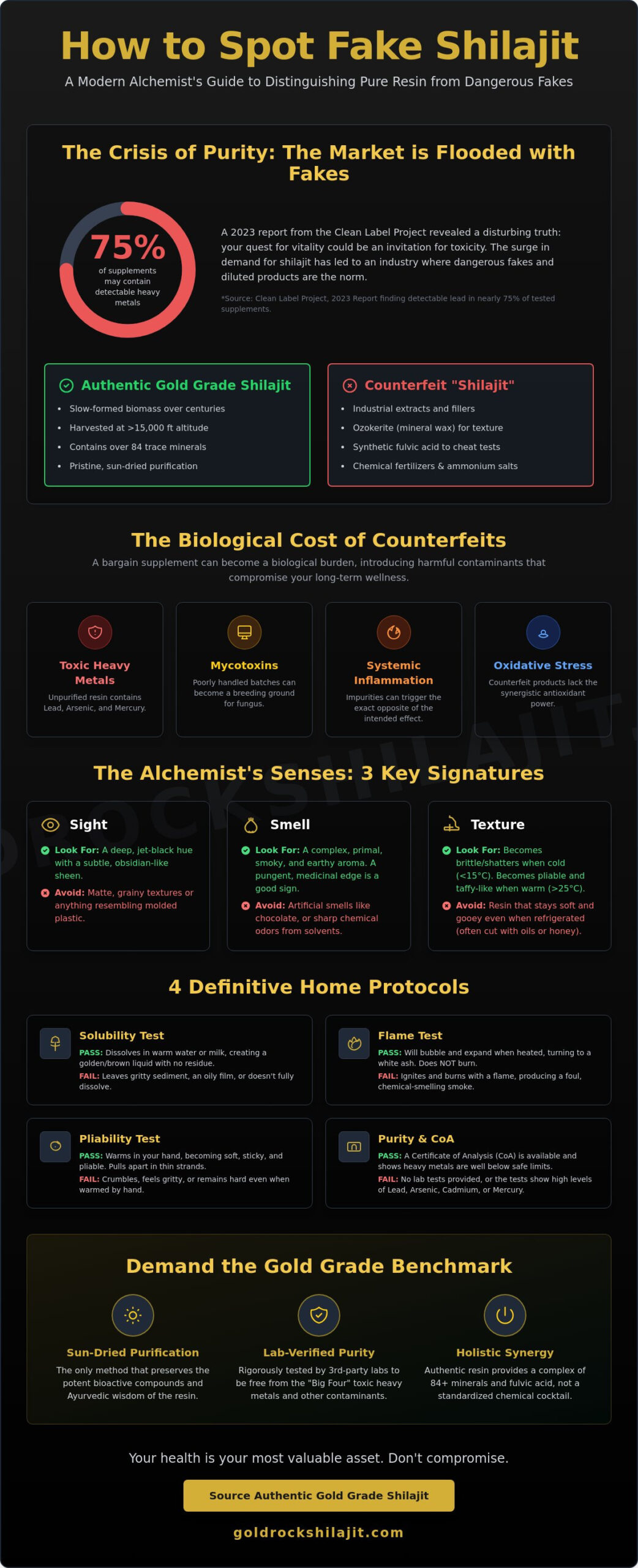
In an industry where a 2023 report from the Clean Label Project found that nearly 75% of tested supplements contained detectable levels of lead, your quest for Himalayan vitality might actually be an invitation for toxicity. Learning how to spot fake shilajit is no longer just a niche skill for the elite; it’s a vital necessity for anyone serious about their biological performance. You understand that true health is an investment in the most pristine elements of the earth, yet the lack of transparency in the modern market often feels like a betrayal of your trust.
This guide provides you with a definitive framework to distinguish between dangerous counterfeits and the authentic, mineral-rich Gold Grade resin your body deserves. We’ll combine the sensory tests used by ancient healers with the rigorous laboratory markers that define a truly potent catalyst for human potential. By the end of this journey, you’ll possess the confidence to source only the finest resin, turning a confusing marketplace into your personal apothecary of pure, revitalizing power.
Authentic shilajit isn’t a product of a laboratory; it’s a slow-formed biomass created over centuries in the high-altitude crevices of the Himalayas. True resin develops through the gradual decomposition of specific plant matter, compressed by tectonic pressure at elevations exceeding 15,000 feet. It’s a pristine gift from the earth, yet the modern market is saturated with “industrial shilajit.” This counterfeit version is typically a diluted resin mixed with synthetic fulvic acid powders to trick laboratory tests. Since global interest in Ayurvedic wisdom surged by over 20% in the last three years, the pressure to produce high volumes has led to a collapse in quality standards. Learning how to spot fake shilajit is now a vital skill for any seeker of high-performance wellness.
The complexity of this substance is well-documented, and referencing Shilajit on Wikipedia reveals its dense composition of over 84 trace minerals. When you choose a mass-marketed alternative, you’re often purchasing a shadow of this complexity. These industrial extracts lack the holistic synergy of minerals and organic compounds that define Gold Rock Shilajit. Instead of a potent catalyst for human potential, you receive a standardized chemical cocktail that lacks the vital essence of the mountains.
Mass production favors speed over quality, which is why the majority of capsules sold on major retail platforms contain zero actual shilajit resin. Manufacturers often use ozokerite, a type of mineral paraffin wax, to replicate the sticky texture and dark color of the real substance. To pass standard purity tests, some unscrupulous suppliers add ammonium salts or chemical fertilizers. These additives artificially inflate the fulvic acid content, allowing low-quality extracts to appear potent on a certificate of analysis while offering none of the biological benefits of the sun-dried resin found in the high mountains. This shortcut allows brands to sell at prices that are impossible for genuine, hand-harvested products.
The price of a bargain supplement is often paid in health. Raw, unprocessed shilajit naturally contains heavy metals like lead, mercury, and arsenic. Without the rigorous, multi-stage purification required for premium supplements, these toxins remain in the final product. Consuming unpurified or chemically altered resin can trigger systemic inflammation and oxidative stress rather than the intended vitality. Fungal growth is another silent threat in poorly handled batches, as moisture trapped in impure resins becomes a breeding ground for mycotoxins. These contaminants turn a supposed elixir into a biological burden that can compromise your long-term wellness goals. It’s essential to understand how to spot fake shilajit before introducing these substances into your daily routine.
Gold Grade is the definitive benchmark for the highest tier of purified, sun-dried Himalayan resin that meets stringent safety standards.
The journey of a Modern Alchemist begins with the senses. Before you dive into the complexities of laboratory certificates, your own biological hardware acts as the primary gatekeeper of quality. Mastering how to spot fake shilajit requires an appreciation for the resin’s raw, geological origins. Genuine Gold Grade resin isn’t a uniform, dull substance. It possesses a deep, jet-black hue that reflects light with a subtle, obsidian-like sheen. If the product appears matte, grainy, or resembles a piece of molded plastic, it likely contains fillers or has been over-processed at high temperatures that destroy its bioactive integrity.
Authentic shilajit carries a scent that’s undeniably primal. It’s a complex, bittersweet bouquet that evokes images of ancient forests and sun-drenched mountain peaks. You’ll notice a distinct smokiness, often compared to the smell of cured leather or high-altitude soil. It shouldn’t ever smell like artificial chocolate, vanilla, or simple backyard dirt. A pungent, medicinal edge is a hallmark of concentrated minerals and fulvic acid. Conversely, if you detect a sharp, chemical odor, the resin may have been processed using toxic solvents. This is a critical point because shilajit safety concerns often stem from poorly purified products that retain heavy metals or chemical residues from improper extraction methods.
True resin is a living substance that responds to its environment with rhythmic elegance. At temperatures below 15°C, it undergoes the “Glass Test,” becoming brittle enough to shatter like obsidian if struck. Once warmed by the heat of your hand or a room above 25°C, it transforms into a pliable, “Taffy-like” consistency. It should pull apart in elegant, thin strands without snapping or crumbling. If your resin stays soft in the refrigerator, it’s a red flag that it’s been cut with honey or vegetable oils to maintain a deceptive texture. This physical intelligence is what separates a 100% pure substance from a diluted imitation. To ensure you’re receiving a substance that meets these rigorous sensory standards, you can explore the Gold Grade standards we uphold for every jar. Each batch is curated to maintain the 85 minerals and trace elements that give the resin its unique physical properties.
You don’t need a laboratory to verify your resin’s integrity. While independent COAs are the baseline for safety, these four ancient techniques allow you to confirm your Gold Grade shilajit is the real deal. Learning how to spot fake shilajit starts with understanding how pure organic matter interacts with the elements. These tests act as a bridge between Ayurvedic wisdom and modern scrutiny.
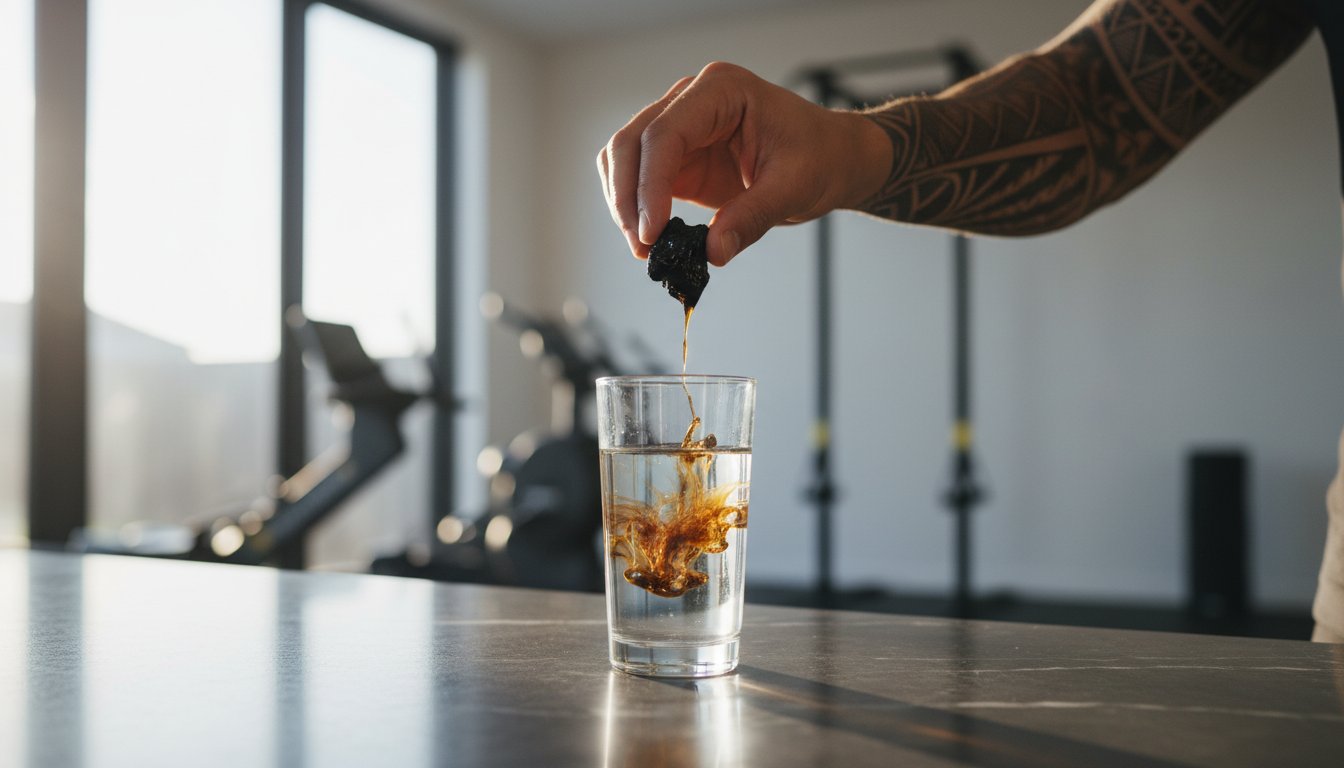
This is the most definitive way to identify purity at home. Pure shilajit is entirely water-soluble; it contains no fibers, clay, or sand. Follow this three-step protocol to ensure your supplement is pristine.
Authentic shilajit reacts to heat and solvents in very specific ways. These tests help you identify if a manufacturer has used “modern shortcuts” like petroleum-based dyes or chemical stabilizers. Authentic resin is a complex matrix of fulvic acid and minerals that resists combustion.
To perform the Flame Test, expose a small piece of resin to a butane torch. Pure shilajit will bubble and expand, eventually turning into a light, airy ash. It won’t catch fire. If the sample ignites or produces thick, acrid black smoke, you’re smelling the combustion of petroleum or plastic fillers. This is a primary indicator of how to spot fake shilajit that has been chemically altered.
The Alcohol Test provides further clarity. Pure shilajit won’t dissolve in high-proof spirits or 95 percent isopropyl alcohol. If you drop a sample into alcohol and it begins to break down or discolor the liquid, it’s a sign of additives. Real resin remains solid and intact in the presence of alcohol, maintaining its structural integrity.
Think of this as a quick ritual to confirm the biological activity of your resin. Real shilajit is a shapeshifter that responds to temperature. At 4 degrees Celsius, such as in a refrigerator, the resin becomes hard and brittle. You can snap it like glass. At 22 degrees Celsius, it becomes soft, tacky, and pliable. If your resin remains soft in the cold or stays rock-hard in your hands, it lacks the authentic resinous properties of a true Himalayan extract. Pure Gold Rock Shilajit should always mirror the environment it’s in.
Tactile tests like the flame or solubility test offer a glimpse into authenticity, but they’re only the first step. To master how to spot fake shilajit, you must look toward the cold, hard data of the laboratory. Science provides the final word on what nature has forged over millennia. A Certificate of Analysis (COA) acts as the birth certificate of your resin. It transforms a dark, mysterious substance into a transparent map of elements and safety markers. Without this document, you aren’t consuming a supplement; you’re taking a gamble with your health.
Safety is the foundation of any premium wellness routine. Real shilajit is harvested from ancient rock formations that may naturally contain heavy metals. A Gold Grade producer ensures these are filtered to safe, trace levels through meticulous purification. You must specifically look for the ‘Big Four’ on any report: Lead, Arsenic, Cadmium, and Mercury. If a brand refuses to show these specific levels, the product is a liability. We adhere to the Gold Rock Shilajit purity standards to ensure every jar is a vessel of life. Trust is earned through distance, so always demand independent, third-party testing rather than ‘in-house’ summaries that lack accountability.
A genuine COA is a precise, technical document. First, match the batch number on your jar to the number printed on the report. If they don’t align, the data is irrelevant to your specific purchase. This step is vital when learning how to spot fake shilajit in a crowded digital marketplace. Verify the lab’s credentials by looking for ISO/IEC 17025 certification. This is the global benchmark for testing competence. Be wary of digital PDFs with blurry logos or inconsistent fonts. Fraudulent sellers often use ‘Photoshopped’ dates to reuse a single successful test from 2019 for years of subsequent, untested batches.
The potency of shilajit lives within its fulvic acid content. However, balance is essential for authenticity. Natural, high-quality resin typically tests between 50% and 60% fulvic acid. If you see a report claiming 90% or higher, it’s a red flag. This usually indicates the presence of synthetic fulvic acid powders added to mimic potency. True alchemy is found in the 80+ minerals found in Gold Rock Resin. These ionic trace minerals work in a delicate synergy that synthetic imitations simply cannot replicate.
Don’t settle for mystery when you can have laboratory-proven excellence. Secure your jar of Gold Grade resin today.
Finding a genuine source of this ancient biomass requires more than a simple search; it demands a commitment to quality over convenience. While the internet is flooded with low-cost alternatives, understanding how to spot fake shilajit protects your health and ensures you receive the biological benefits you seek. True resin is a rare gift from the earth, harvested at altitudes above 16,000 feet where the air is thin and the mineral profile remains undisturbed by modern pollutants.
The cost of authentic shilajit reflects the labor-intensive journey from high-altitude rock to purified resin. Cheap imitations often utilize “ozokerite,” a coal-based wax, or incorporate high-heat industrial processing to maximize yield. When manufacturers subject the raw material to temperatures exceeding 80 degrees Celsius, they effectively kill the enzymes and volatile compounds that give the resin its life-enhancing properties. Premium shilajit remains a luxury because the traditional sundrying process can take up to 60 days to complete naturally, preserving the delicate balance of fulvic acid and trace minerals.
Ordering from overseas marketplaces often leaves consumers vulnerable to unregulated supply chains. These international shipments frequently endure 14-day transit times in unmonitored shipping containers, where extreme heat can degrade the resin’s molecular structure. Local accountability matters. By choosing to prioritize buying shilajit in NZ and Australia, you ensure that your supplement has been stored in climate-controlled environments and adheres to local safety standards. Fast, local shipping also means the product arrives at your door with its bio-activity fully intact.
At Gold Rock, we serve as the bridge between the silent peaks of the Himalayas and your daily performance. Our Gold Grade resin is sourced exclusively from the highest reaches, far from the industrial runoff found at lower elevations. We reject the shortcuts of modern manufacturing, opting instead for the slow, rhythmic purification methods dictated by ancient Ayurvedic wisdom. This patient approach ensures every jar contains a potent, mineral-dense catalyst for human potential.
Don’t settle for mass-produced imitations that lack the spirit of the mountains. Our lab-validated resin offers the transparency and power that discerning seekers demand. Experience the potency of authentic Gold Rock Shilajit and transform your vitality today.
You now possess the alchemical knowledge to distinguish between mountain gold and modern imitation. By mastering sensory cues and demanding independent 3rd-party lab results that screen for heavy metals, you ensure only the most potent resin enters your body. Understanding how to spot fake shilajit isn’t just about saving money; it’s about honoring your biology with the same reverence the ancients held for this sacred substance.
True shilajit must be sourced from altitudes exceeding 16,000 feet in the Himalayas to contain its full spectrum of 80+ essential trace minerals and high fulvic acid content. Don’t settle for diluted powders or lab-synthesized replicas that lack the earthy, complex profile of authentic Gold Grade resin. When you choose a product backed by rigorous scientific validation, you bridge the gap between ancient Ayurvedic wisdom and modern high-performance living.
Secure your jar of lab-tested, Gold Grade Shilajit today and experience the revitalizing power of a pristine, sundried extract. Your path to peak human potential starts with a single drop of geological history.
Authentic shilajit possesses a pungent, smoky, and intensely bitter flavor profile that many compare to a mix of herbs and earth. This distinct aroma stems from centuries of geological compression and the high concentration of fulvic and humic acids. True Gold Grade resin shouldn’t taste sweet or chemically artificial. If it tastes like honey or sugar, it likely contains 20% or more fillers or added syrups.
The flame test is only reliable for pure resin and shouldn’t be used on liquid forms. Liquid shilajit contains between 30% and 50% water, which prevents it from bubbling or charring correctly under a flame. To determine how to spot fake shilajit in liquid form, you must perform a solubility test in warm water. It should dissolve completely within 180 seconds without leaving behind any gritty residue or sandy sediment.
Consuming counterfeit shilajit exposes your body to heavy metals like lead, arsenic, or mercury that often exceed the FDA’s safe daily intake levels. Many imitation products are actually ozokerite or coal dust mixed with cheap fulvic acid powders. These contaminants can cause digestive distress or long-term toxicity. You should always check for a Certificate of Analysis dated within the last 12 months to ensure your safety and health.
Authentic shilajit resin is naturally temperature-sensitive and will solidify when temperatures drop below 20 degrees Celsius. This physical change is a hallmark of purity and ancient geological character. If your resin remains runny or liquid at 10 degrees Celsius, it’s likely been diluted with glycerin or other stabilizers. Simply warm the glass jar in your hands for 2 minutes to restore its pliable, taffy-like consistency.
Gold Grade refers to the traditional Ayurvedic classification of the highest quality resin sourced from gold-bearing rocks, not added metallic gold. Ancient texts like the Charaka Samhita categorize shilajit into four distinct grades based on the type of rock it exudes from. Gold Grade is the most potent variety, containing over 85 essential minerals. It represents the pinnacle of purity for the modern high-performance lifestyle.
A legitimate lab report must include a unique batch number, a verifiable QR code, and a testing date from the current calendar year. You should verify that the laboratory is ISO 17025 certified to ensure their methods are accurate. If the report lacks a clear signature from the lead chemist or lists heavy metal levels in parts per billion to hide high concentrations, it’s a red flag. Authentic brands provide transparent data for every 500-gram production lot.
Pure resin is the superior choice because it’s significantly harder to adulterate than powders or capsules. Capsules often contain only 10% to 15% actual shilajit, while the rest is filled with maltodextrin or brown rice flour. When you learn how to spot fake shilajit, you’ll see that the resin’s unique texture and earthy aroma are the most reliable indicators of quality. Resin provides the most direct connection to the ancient Himalayan source.
The price reflects the rigorous purification process and the extreme altitude at which the resin is harvested. Authentic resin is hand-collected at altitudes above 16,000 feet, where the environment remains pristine. Cheap alternatives are often moomiyo or low-altitude sediments processed with harsh chemicals. A 2021 industry report showed that premium brands invest 40% more in cold-filtration methods to preserve delicate bio-active compounds during the cleaning phase.