What if the vibrant threads in your pantry are nothing more than dyed corn silk masquerading as the world’s most sacred spice? It’s a frustrating reality for many; as of May 2026, retail prices for premium saffron have reached $15 per gram, yet the market remains flooded with inferior imitations. You know that true, pristine saffron is a potent catalyst for human potential, yet the fear of wasting resources on fraudulent products is real. You deserve the authentic, earthy power that only a genuine harvest can provide.
This guide will empower you to look beyond the marketing and master how to identify high quality saffron using both the wisdom of the ancients and the rigorous benchmarks of the ISO 3632-1:2025 standard. We’ll explore the chemical precision of the new “Extra Class” grading introduced on July 16, 2025; the sensory cues of authentic Negin threads; and the laboratory validation that separates a premium supplement from a culinary placeholder. You’re about to transform from a cautious consumer into a confident guardian of your own wellness and vitality.
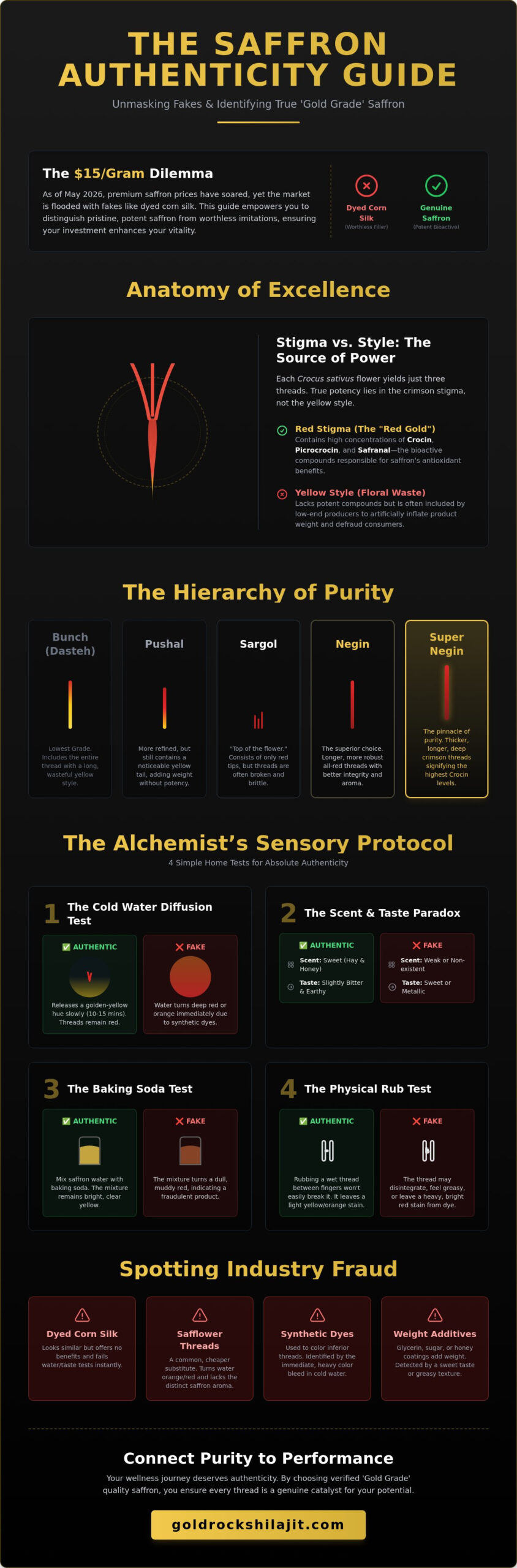
Saffron is far more than a simple culinary addition; it’s a legacy of the earth’s precise geometry. Harvested from the Crocus sativus flower, each thread is actually the dried stigma of the plant. To master how to identify high quality saffron, you must first understand the anatomy of these delicate crimson filaments. A single flower produces only three stigmas, which are connected to the plant by a yellow stalk called the style. In the world of premium wellness, this yellow style is viewed as floral waste. It lacks the concentrated bioactive compounds that define “Gold Grade” quality, yet it’s often left attached by low-end producers to artificially increase the weight of the product.
The global market recognizes a specific hierarchy of saffron grades and cuts that dictates both the potency and the price of the harvest. At the entry level is Bunch (Dasteh), which includes the entire thread from the red tip down to the long yellow style. Pushal is slightly more refined, featuring the red stigma with a smaller yellow tail. However, the modern alchemist seeks the two highest tiers: Sargol and Negin. These grades represent the pinnacle of purity, where the “Red Gold” is separated from the inert plant matter to ensure maximum efficacy.
Sargol, which translates to “top of the flower,” consists exclusively of the red tips of the stigma. While it’s chemically potent, the process of removing the style often results in broken, brittle fragments. Negin threads are different. They’re longer, more robust, and include a microscopic portion of the style at the very base to maintain the thread’s structural integrity. This careful cut ensures that the volatile oils and aromatic compounds remain sealed within the filament. For those who prioritize a premium wellness routine, Negin is the superior choice because it offers a more consistent release of nutrients compared to the shattered pieces found in Sargol batches.
Super Negin is the rarest and most potent classification available. These threads are visually striking; they’re noticeably thicker and possess a deep, uniform crimson hue without a single trace of orange or yellow. This visual perfection isn’t just for show. The length and girth of a Super Negin thread signify a higher concentration of crocin, the primary antioxidant responsible for the spice’s revitalizing properties. When you invest in Red Gold Saffron Premium Super Negin, you’re choosing a harvest that aligns with the rigorous ISO 3632-1:2025 standards released on July 16, 2025. It’s an authentic catalyst for human potential, sourced with the same reverence we apply to our Himalayan resins.
Verifying the soul of your spices is a ritual of mindfulness. It’s the bridge between being a passive consumer and becoming a master of your own wellness. Before you commit your harvest to a daily tonic or a celebratory meal, you must be certain of its purity. The global market is currently saturated with common adulterants in saffron, including Safflower (Carthamus tinctorius) and dyed corn silk. These fillers offer no bioactive benefits and can even introduce synthetic toxins into your body. Always test a small sample of three to five threads from every new batch. Documenting your results builds a personal library of excellence, ensuring you only ever fuel your potential with “Gold Grade” power.
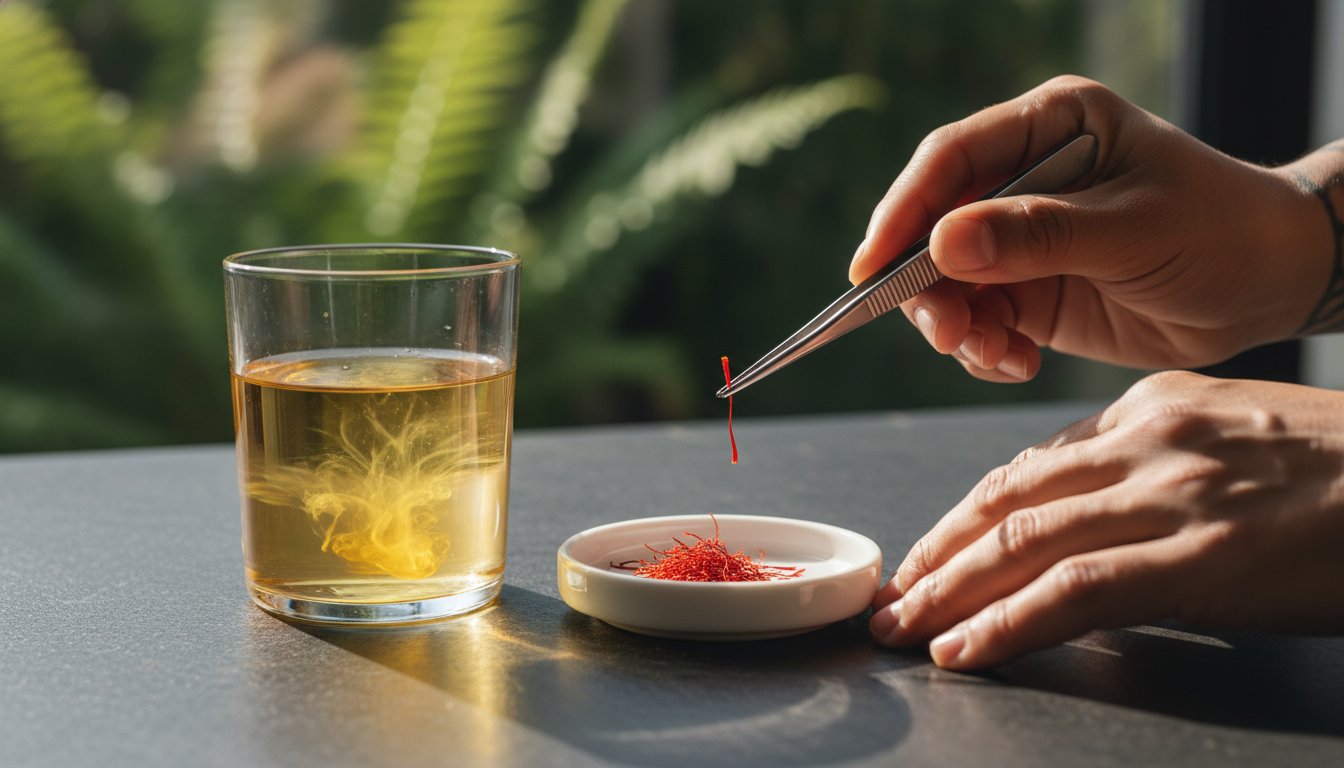
Place your threads in a small bowl of cold water and observe. Real saffron is patient; it releases a luminous, golden-yellow hue slowly over 10 to 15 minutes. If the water turns deep red or orange immediately, you’re likely witnessing the release of synthetic dyes rather than natural crocin. Crucially, the authentic thread itself must remain a vivid red even after it has finished releasing its golden essence into the liquid. This slow diffusion is a primary marker in how to identify high quality saffron and separate it from cheap, dyed imitations.
High-quality saffron presents a fascinating sensory contradiction that fakes cannot replicate. When you open a pristine jar, the aroma should be a complex, sweet blend of sun-dried hay and floral honey. However, this sweetness is a trick of the nose. When you place a thread on your tongue, it must taste slightly bitter and earthy. If the spice tastes sweet or metallic, it’s a definitive sign of sugar or honey coating, which are common tactics used to artificially increase weight. Master the “Sweet Scent, Bitter Taste” rule to instantly filter out low-grade products.
For those seeking scientific certainty, the baking soda test provides clear chemical evidence. Mix a pinch of saffron water with a small amount of baking soda; pure saffron will maintain a bright, clear yellow color. If the mixture turns a dull, muddy red, the product is likely fraudulent. Follow this with the physical Rub Test. Take a wet thread and rub it between your fingers. Genuine filaments are resilient and will stay intact, while imitations often crumble into a fine, powdery dust. If your current supply fails these trials, consider upgrading to a truly pristine Super Negin that meets the highest standards of laboratory validation.
The soul of the Crocus sativus resides in three primary bioactive molecules. These compounds bridge the gap between ancient Ayurvedic wisdom and the exacting demands of contemporary biohacking. To understand how to identify high quality saffron, you must look past the visual allure and into the underlying chemistry. Crocin is the first pillar; it’s the carotenoid responsible for that legendary crimson hue and provides the potent antioxidant properties that protect your cells. Picrocrocin follows, serving as the source of the spice’s distinct bitter flavor and providing significant digestive support. Finally, there’s Safranal, a volatile oil that creates the intoxicating aroma and acts as a natural mood-booster. Learning how to identify high quality saffron at a molecular level ensures your resources are invested in genuine transformation.
Modern science uses these three markers to quantify excellence. The international benchmark is the ISO 3632-1:2025 standard, which was updated on July 16, 2025, to include even more stringent classifications. Through a scientific analysis of saffron quality, laboratories measure “Coloring Strength” based on crocin concentration. Category I is the highest possible grade, requiring a coloring strength score of 200 or higher. For the modern alchemist, Category I is the only acceptable standard for therapeutic use. Anything less is merely a culinary garnish, lacking the molecular density required to act as a true catalyst for vitality.
Transparency is the foundation of our “Gold Grade” philosophy. Just as we prioritize independent lab testing for our Himalayan resins, we demand the same verification for our saffron. This ensures that the bioactive compounds haven’t been degraded by improper handling or environmental exposure during the journey from the field to your daily routine.
Even the most pristine harvest can lose its potency if it’s not respected. Heat, light, and humidity are the enemies of safranal and picrocrocin. Over time, poor storage causes these volatile oils to evaporate, leaving you with a thread that looks red but feels hollow. You can perform the “Brittle Test” at home to check for this. Authentic, well-preserved threads should feel dry and slightly brittle to the touch. This indicates a moisture content of less than 12%, which is the threshold for preventing mold while locking in the chemical profile. If a thread feels soft or pliable, it likely contains excess water weight or has begun to degrade, losing the very essence that makes it a premium wellness tool.
Because saffron is the most expensive botanical on earth, it’s a primary target for sophisticated deception. For the modern alchemist, mastering how to identify high quality saffron is an essential skill for ensuring your supplements act as a true catalyst for performance. Fraudulent producers often prioritize profit over purity, using “Weight Fraud” to inflate their margins. This involves coating threads in honey, vegetable oil, or glycerin. While these additives make the filaments appear glossy and heavy, they simultaneously dilute the bioactive density of the spice. If your threads feel sticky or leave an oily residue on your skin, you’re paying for cheap fillers rather than the “Red Gold” your body requires.
Chemical adulteration is a more sinister threat. Synthetic dyes like Tartrazine (E102) and Sunset Yellow are frequently used to give life to exhausted or fake threads. These coal-tar derivatives have no place in a premium wellness routine and can actually trigger inflammatory responses. This reality reinforces the importance of Herbal Remedies Purity across all our offerings. You should also always avoid pre-ground saffron powder. Powder is the ultimate mask for fraud; it’s often bulked out with ground rice, turmeric, or even toxic brick dust. To ensure you’re receiving a pristine product, only ever purchase whole filaments that display the distinct structural hallmarks of the Crocus sativus flower.
One of the most common visual frauds is the substitution of true saffron with Safflower (Carthamus tinctorius), often misleadingly labeled as “Mexican Saffron.” While Safflower is a legitimate herb in its own right, it’s biologically unrelated to the crocus plant. It lacks the trumpet-shaped stigma and, more importantly, contains zero picrocrocin or safranal. Visually, Safflower looks like a tangled mess of thin, orange-yellow needles, whereas high-quality saffron consists of individual, thick, crimson threads that broaden at the tip. Choosing an imitation means missing out on the neurological and digestive benefits that only the authentic “Gold Grade” harvest can provide.
Trust your olfactory senses when evaluating a new batch. If you detect a sharp, metallic, or overtly chemical smell, the product has likely been “sprayed” with synthetic safranal to mimic the aroma of a fresh harvest. Authentic saffron possesses a rhythmic, earthy elegance that smells of sun-warmed hay and honey. Producers may also use mineral sprays to make threads appear more vibrant or to add weight. These coatings interfere with the bioavailability of the spice, preventing the crocin from properly absorbing into your system. To experience the power of unadulterated purity, we recommend sourcing from a provider that values transparency as much as potency. You can experience the power of authentic Super Negin here and feel the difference that laboratory-validated quality makes in your daily ritual.
The final stage of the alchemical journey is the most critical: the act of sourcing. Purity is not merely a laboratory metric; it is the ultimate performance catalyst for those seeking to unlock their full human potential. When you understand how to identify high quality saffron, you realize that the geography of the harvest is as vital as the thread’s color. Pristine fields in the heart of the Himalayas and the ancient, mineral-rich soils of Iran produce a “Gold Grade” harvest that is biologically distinct from mass-market alternatives. These regions offer the perfect intersection of high-altitude UV exposure and traditional hand-harvesting techniques that preserve the delicate bioactive compounds within the stigma.
Integrating this “Red Gold” into your daily ritual creates a powerful synergy with other high-performance supplements. Many of our clients find that high-quality saffron perfectly complements a Himalayan Shilajit Resin routine. While the resin provides a foundation of over 80 trace minerals and fulvic acid, the saffron acts as a revitalizing antioxidant boost. Together, they form a holistic protocol designed for clarity, mood stability, and physical endurance. By May 2026, the distinction between “culinary grade” and “therapeutic grade” has never been more important for the data-driven wellness seeker.
Our commitment to excellence is grounded in the Super Negin standard, the rarest and most potent cut of the saffron flower. We ensure every gram we provide meets the rigorous ISO 3632-1:2025 standards established on July 16, 2025. Transparency is our signature; we prioritize glass packaging to protect the volatile safranal and picrocrocin from oxidative stress. Plastic containers can leach chemicals and allow light to degrade the spice’s potency, whereas our dark glass preserves the “Alchemical” properties of the harvest. You can explore the results of this meticulous sourcing in our Red Gold Saffron collection.
Preserving the vitality of your saffron requires a final act of stewardship. Once you have mastered how to identify high quality saffron and secured a pristine supply, you must store it in a cool, dark, and dry environment. Even the finest threads will lose their mood-boosting safranal if exposed to direct sunlight or moisture. To ensure you’re making the most of your investment, keep this final checklist in mind for every purchase:
If you have further questions about our laboratory validation or ethical harvesting practices, we invite you to explore our FAQs for more purity insights. Your journey toward genuine transformation deserves nothing less than the world’s most potent, unadulterated botanicals.
You’ve now transcended the confusion of the marketplace to become a true guardian of your own vitality. By mastering how to identify high quality saffron, you’ve gained the power to distinguish the potent Super Negin cut from common floral waste. You understand that the luminous golden hue released during the “Slow Gold” test is more than just color; it’s a visual confirmation of the crocin and safranal that fuel your daily performance. With the rigorous ISO 3632-1:2025 standards as your guide, you no longer have to fear the synthetic dyes or weight frauds that compromise lesser products.
True wellness requires an uncompromising commitment to purity. Our Red Gold Saffron is ethically sourced and undergoes independent lab testing to ensure it meets our “Gold Grade” benchmarks for pristine quality. Don’t leave your potential to chance with unverified imitations. Unlock your potential with our Lab-Tested Red Gold Saffron and experience the profound difference of the world’s most refined botanical catalyst. Your path to a more vibrant, holistic lifestyle is now clear.
Real saffron is never sweet to the taste; it must be bitter and earthy. While the aroma mimics a complex blend of honey and hay, the chemical picrocrocin ensures a distinct bitterness on the tongue. If you experience a sugary flavor, the producer has likely coated the threads in syrup or honey to artificially increase the weight. This “Weight Fraud” is a common tactic that dilutes the potent, “Gold Grade” benefits you expect from an authentic harvest.
Price is a poor indicator of purity on its own, though it provides a baseline for expectations. As of May 2026, premium retail saffron costs between $5 and $15 per gram. While a very low price is a definitive red flag for adulteration, a high price doesn’t guarantee quality. Some retailers mark up Category III saffron to Category I prices to deceive buyers who equate cost with excellence. Always demand ISO 3632-1:2025 verification instead.
Consuming fraudulent saffron results in a total loss of therapeutic value and potential exposure to synthetic toxins. Fake threads, often made of corn silk or safflower, lack the bioactive compounds found in true Crocus sativus. More dangerously, synthetic dyes like Tartrazine (E102) are coal-tar derivatives that can trigger inflammatory responses in sensitive individuals. You’re effectively consuming a chemical cocktail rather than a performance-enhancing botanical catalyst.
High-quality saffron maintains its peak potency for 24 to 36 months when stored in airtight glass. After this period, the volatile safranal responsible for the mood-boosting effects begins to evaporate at an accelerated rate. To preserve the “Gold Grade” profile, you must keep the threads at a moisture level below 12% and away from direct sunlight. Threads that feel soft or lack a punchy aroma have likely already lost their alchemical power.
If your water turns red immediately, the saffron is almost certainly dyed with artificial pigments. This visual cue is a foundational lesson in how to identify high quality saffron. Authentic filaments release a luminous golden-yellow hue slowly over 15 minutes. A sudden bleed of deep red or orange suggests the presence of synthetic colorants that have no place in a pristine, holistic wellness routine.
Saffron powder is rarely high quality because it’s too easy to adulterate with cheap fillers. Grinding the threads destroys the visual hallmarks of the Super Negin grade, allowing producers to mix in turmeric, paprika, or even ground rice. For the modern alchemist, whole threads are the only acceptable form. Purchasing whole filaments ensures you receive the full spectrum of crocin and safranal without the risk of hidden contaminants.
You can detect dyed threads by performing a Rub Test after soaking the filaments in water. When you’ve mastered how to identify high quality saffron, you’ll notice that real threads remain red even after releasing their golden pigment. If you rub a soaked thread between your fingers and it loses its color or turns white, it was artificially dyed. Authentic “Gold Grade” saffron is red to the core, maintaining its structural and visual integrity throughout the diffusion process.
Country of origin plays a massive role in determining the concentration of bioactive compounds like crocin. Iran currently produces approximately 90% of the world’s supply, with the high-altitude Khorasan province offering ideal conditions for chemical density. Similarly, harvests from the heart of the Himalayas benefit from intense UV exposure, which stresses the plant into producing more antioxidants. These specific terroirs are essential for creating a “Gold Grade” product that truly functions as a performance catalyst.