
While the global shilajit market surges toward a projected USD 324 million by 2030, the most potent biological catalyst on earth isn’t a universal remedy for everyone. You’ve likely felt the pull of this ancient Ayurvedic wisdom, yet the fear of heavy metal contamination or sudden heart rate spikes is a valid intuition that deserves respect. It’s vital to understand who should not take shilajit before incorporating this Gold Grade resin into your daily ritual. The 2025 FDA Advisory No. 2025-1407 reminds us that safety depends on the intersection of your unique physiology and the purity of the source.
You’ll discover the specific medical conditions, medication interactions, and purity risks that determine if Himalayan shilajit is right for your wellness journey. We’ll provide a clear “yes or no” framework for usage, including a list of medications to watch out for and the precise laboratory standards that define a safe resin. You’ll learn how to identify authentic, high-quality products that meet the 2026 safety standards for arsenic and lead, ensuring your path to vitality remains both potent and protected.
Shilajit is far more than a simple botanical extract. It’s a complex, bioactive mineral pitch formed over centuries by the slow decomposition of organic matter trapped within Himalayan rock layers. This substance contains 85+ trace minerals in their ionic form, alongside high concentrations of fulvic acid. In our role as the Modern Alchemist, we view this resin as a potent metabolic catalyst designed to unlock human potential. However, this high mineral density is exactly why you must respect your individual biochemistry. Before beginning this journey, you’ve got to identify who should not take shilajit to ensure your experience remains restorative rather than disruptive.
The distinction between raw mountain material and purified Gold Grade resin is critical. Raw shilajit, often sold by unregulated vendors, can harbor heavy metals or fungal toxins that negate its benefits. We treat the purification process with the same reverence as ancient practitioners, ensuring that only the pristine essence of the mountain reaches your routine. For a comprehensive overview of shilajit and its geological origins, historical records confirm its status as a premier substance in traditional medicine that requires careful handling.
Fulvic acid acts as a primary transport molecule. It increases the permeability of cell membranes, which significantly boosts the bioavailability of other nutrients and minerals. While this is a breakthrough for vitality, it’s a double-edged sword. If you’re consuming medications or toxic substances, shilajit might accelerate their absorption into your system. Within the cell, these 85+ minerals support the mitochondria in ATP production; this creates a surge of cellular energy that requires a stable physiological foundation to manage effectively.
Ancient Ayurvedic wisdom classified shilajit as a “Rasayana,” a substance capable of returning the body to a state of youthful vigor. Traditional protocols often paired it with specific carriers like warm milk or honey to temper its intensity. Modern biohackers often seek the same results but sometimes overlook the necessary precautions. By bridging traditional use with modern laboratory validation, we can determine what shilajit does for the body while maintaining strict safety standards. This intersection of the mystical and the functional helps clarify who should not take shilajit based on current health status and pharmaceutical needs.
Himalayan resin is a profound force of nature, but even the most potent catalysts require the right biological environment to flourish. When determining who should not take shilajit, we must look beyond general wellness and examine specific physiological boundaries. This isn’t a reflection of the resin’s quality, but rather a respect for the unique terrain of your own biology. While it serves as a premium tool for human potential, certain conditions create a landscape where this mineral pitch is simply not the right fit.
Shilajit is naturally rich in iron, a mineral vital for oxygen transport and cellular vitality. For many, this is a significant benefit. However, for individuals with Hemochromatosis, a genetic condition where the body stores excess iron, adding a concentrated mineral pitch can lead to iron toxicity. This accumulation can damage vital organs, particularly the heart and liver. Similarly, those diagnosed with Sickle Cell Anaemia or Thalassemia face complex blood chemistry challenges. The high mineral density and iron content could interfere with delicate red blood cell management. If you manage these conditions, you must consult a specialist to ensure your iron levels remain within a safe threshold before considering any new supplement.
The path of the Modern Alchemist values long-term safety above all else. Because there are currently no long-term longitudinal studies regarding fetal development and shilajit as of May 2026, pregnant and breastfeeding women should abstain from use. A developing infant’s renal system is exceptionally delicate. The complex mineral profile of Gold Grade resin might be too taxing for their kidneys to process effectively. We recommend waiting until after breastfeeding to reintroduce shilajit as a tool for energy recovery. Similarly, children under the age of 18 should avoid consumption, as their hormonal and metabolic systems are still in a state of flux. If you have questions about specific life stages, our frequently asked questions provide more nuanced guidance on safe integration.
Ayurvedic wisdom suggests a rhythmic and respectful approach to supplementation. During an active infection or high fever, the body enters an acute inflammatory state. Traditional practitioners often advised pausing the use of rejuvenators like shilajit during these times. This allows the body’s natural defenses to focus entirely on the immediate threat without the added metabolic work of processing dense minerals. Beyond these specific medical conditions, the dangers of impure shilajit from unverified sources represent the most universal contraindication for everyone. Using a product that hasn’t been laboratory validated is a risk that no high-performance lifestyle should accommodate.
The transformative power of Gold Grade shilajit lies in its ability to harmonize cellular function, but this very potency can lead to unintended synergies with pharmaceutical interventions. When considering who should not take shilajit, those currently managing chronic conditions with prescription medications must proceed with heightened awareness. Because the resin acts as a bio-enhancer, it can amplify the effects of certain drugs, leading to physiological shifts that require careful monitoring. It’s a delicate dance between ancient wisdom and modern chemistry.
Shilajit’s fulvic acid and trace mineral profile promote vasodilation, which naturally encourages healthy blood flow through the vascular system. While this is a breakthrough for most, this effect can compound the impact of antihypertensive medications like ACE inhibitors or beta-blockers. If you’re on blood pressure medication, a sudden “dip” in pressure might manifest as dizziness, lightheadedness, or even fainting. The Modern Alchemist rule is simple: start with a micro-dose to gauge your body’s initial response. This measured approach allows you to observe how your blood pressure reacts before committing to a full serving.
The resin’s influence on glucose metabolism is equally profound. By supporting pancreatic function and increasing insulin sensitivity, shilajit helps the body manage blood sugar more efficiently. However, for a diabetic user already taking insulin or Metformin, this enhanced sensitivity may lead to hypoglycaemia. Monitoring your blood sugar becomes non-negotiable in these instances. It’s essential to collaborate with a healthcare provider who can help adjust your medication dosages as your body’s natural efficiency improves. This partnership ensures you don’t experience the “crash” associated with over-taxed glucose regulation.
Beyond metabolic and cardiovascular concerns, the immunomodulating properties of shilajit present a specific challenge for those on immune suppressants. If you’re taking medication to manage an autoimmune condition or prevent organ rejection, the resin’s tendency to bolster the immune response might interfere with your treatment goals. Similarly, the high mineral content of our shilajit resin can alter electrolyte balance. This is a critical consideration for anyone on diuretics, as these medications already manipulate the body’s mineral levels. Understanding who should not take shilajit without professional medical supervision ensures your journey toward vitality remains grounded in safety and scientific authority.
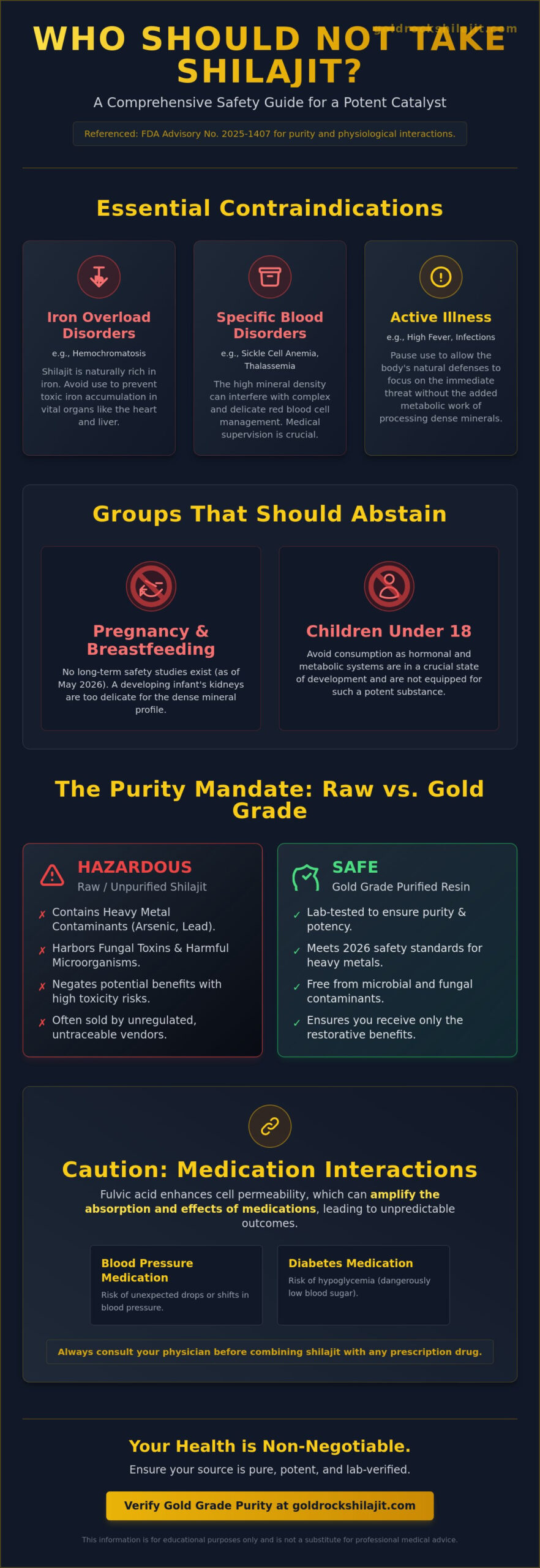
Many people asking who should not take shilajit are actually concerned about the wrong risk. The primary danger rarely lies in the resin’s inherent biological properties; it resides in the impurities of low-quality, unrefined products. Raw mountain material, scraped directly from high-altitude rock faces, is often teeming with fungal growth, mycotoxins, and environmental pollutants. Without the meticulous intervention of a Modern Alchemist, these hazardous contaminants remain trapped within the pitch, ready to enter your system. Authentic safety is found in the intersection of ancient sourcing and modern laboratory validation.
Because shilajit forms within the geological layers of the earth, it acts like a sponge for its environment. It naturally absorbs the minerals surrounding it, which includes beneficial trace elements but also toxic heavy metals if the source isn’t pristine. As of May 2026, the FDA maintains strict limits for adult exposure in dietary supplements, including a 10.00 ppm limit for lead and a 0.30 ppm limit for cadmium. Gold Grade purification goes far beyond these baseline requirements. We utilize independent laboratory testing in New Zealand and Australia to ensure every batch meets the 1.00 ppm mercury and 10.00 ppm arsenic safety thresholds. A legitimate Certificate of Analysis (COA) is the only definitive proof that your resin is a catalyst for health rather than a source of toxicity.
Structural integrity is your first line of defense against adulteration. Pure resin is incredibly difficult to counterfeit or dilute without fundamentally changing its physical nature. In contrast, mass-produced powders and capsules are frequently extended with maltodextrin or synthetic fillers to lower production costs. These hidden additives can trigger unknown allergic reactions or metabolic spikes that complicate your wellness journey. Identifying authentic Gold Rock Shilajit Resin 15g is an exercise in sensory awareness. True resin has a distinct, earthy aroma and a glossy, obsidian-like texture that softens with the warmth of your hands. It should dissolve completely in warm water, leaving no gritty residue or sandy sediment behind.
Choosing a lab-validated source is the most critical decision you’ll make for your high-performance lifestyle. Don’t compromise your biology with unverified extracts that lack a transparent chain of custody. Experience the power of pristine Himalayan minerals and buy authentic shilajit from a trusted New Zealand source to ensure your transformation is both potent and protected.
Once you’ve determined that you don’t fall into the categories of who should not take shilajit, the next step is a respectful and deliberate introduction. This isn’t a supplement to be rushed. As a Modern Alchemist, you understand that profound transformation requires a measured pace. We advocate for a “Low and Slow” approach, beginning with a portion no larger than a grain of rice or a small pea. This allows your unique physiology to harmonize with the 85+ trace minerals without overwhelming your metabolic pathways. By starting small, you can observe how the resin interacts with your energy levels and digestion before increasing the serving size.
Cycling is another essential pillar of safe integration. While the benefits of Gold Grade resin are cumulative, the body thrives on rhythm rather than constant saturation. We recommend a protocol of 6 to 8 weeks of consistent use followed by a 1 to 2 week break. This pause prevents mineral stagnation and allows your system to recalibrate. During your active weeks, prioritize hydration. The fulvic acid in shilajit is a powerful transport molecule, but your kidneys and liver require ample water to process and circulate these minerals effectively. A diet rich in whole foods further supports this biological alchemy, ensuring the resin acts as a true catalyst for your potential.
The first month of your journey is an observation phase. During Week 1, try taking your resin every other day rather than daily. This conservative schedule helps you monitor for what practitioners call a “healing crisis.” These are mild, temporary shifts such as slight headaches or changes in bowel movements as your body begins to detoxify and recalibrate its cellular energy. If you experience these, simply maintain your current dose or slightly reduce it until the symptoms subside. For those seeking precise measurement instructions to ensure they stay within safe boundaries, our guide on how much shilajit to take per day offers detailed clarity for every lifestyle.
Safety isn’t just about how you take the resin; it’s about what the resin contains. Our commitment to the Gold Grade standard begins at the source, where we ethically harvest from the most pristine, high-altitude regions of the Himalayas. Unlike mass-market alternatives, our resin undergoes a slow, natural sun-drying process that preserves the delicate bioactive compounds. We subject every batch to rigorous New Zealand-standard laboratory testing to verify it’s free from the contaminants that define who should not take shilajit. This transparency ensures that when you choose Gold Rock, you’re partnering with a brand that demands uncompromising purity. Explore our Gold Grade Shilajit collection today and begin your journey toward revitalized human potential with absolute confidence.
Your journey toward human potential begins with the wisdom to know when to pause. We’ve explored the critical boundaries of who should not take shilajit, from the iron-retention risks of Hemochromatosis to the delicate interactions with blood pressure medications. True transformation isn’t found in a reckless sprint but in a measured, informed integration of nature’s most potent catalysts. By respecting these physiological guardrails and rejecting the hazards of unpurified, “raw” mountain material, you align yourself with a higher standard of wellness.
High-performance living demands a partner that values transparency as much as potency. Our Gold Grade resin provides 85+ trace minerals in their most bioavailable ionic form, sourced from the most pristine altitudes of the Himalayas. We ensure every batch is independent lab tested for heavy metals to guarantee your safety against the rigorous standards of May 2026. It’s time to stop guessing and start thriving. Experience the purity of Gold Rock Shilajit Resin and reclaim your vitality today. You’re ready to unlock a new level of grounded, authentic energy.
You can take shilajit with high blood pressure, but you must monitor your levels closely. Because the resin acts as a vasodilator, it can naturally lower blood pressure. If you’re on antihypertensive drugs, this could lead to hypotension. Start with a micro-dose of 100mg to see how your body responds. Always consult your physician to ensure your medication remains balanced with this potent catalyst.
Shilajit is generally considered supportive of renal health, but those with active kidney stones should proceed carefully. Some traditional texts mention its role in breaking down stones; yet its high mineral density requires efficient filtration. If your stones are related to uric acid, be aware that shilajit may influence these levels. Consuming 2 to 3 liters of water daily is essential to help your kidneys process these ionic minerals.
Taking an excessive amount, such as more than 500mg in a single serving, can lead to a “healing crisis” or metabolic overwhelm. You might experience a sudden surge in body heat, a racing heart, or digestive discomfort. If this happens, stop use for 48 hours and increase your water intake. Most users find that a pea-sized portion, roughly 250mg, is the ideal threshold for daily vitality without overstimulation.
Heart palpitations can occur if the dosage is too high or if you’re sensitive to its energy-boosting properties. Shilajit enhances mitochondrial function and ATP production, which can feel like a “caffeine rush” for some. If you feel a fluttering in your chest, it’s a sign to reduce your dose. This is a key indicator for who should not take shilajit in high concentrations without first building a tolerance.
It’s safe to combine shilajit with coffee or tea, and many users enjoy the synergistic boost. However, the fulvic acid in the resin can increase the absorption of caffeine, making your morning cup feel significantly stronger. If you’re sensitive to stimulants, try taking your Gold Grade resin with warm water or herbal tea instead. This prevents overstimulation while still delivering the 85+ trace minerals to your cells.
There is limited clinical data on shilajit’s interaction with SSRIs or benzodiazepines, but caution is warranted. Since shilajit influences neurotransmitter activity and metabolic pathways, it could theoretically alter how your body processes these medications. We recommend a 4-hour window between taking your medication and your resin. Understanding who should not take shilajit alongside complex psychiatric protocols requires a direct conversation with your healthcare provider to ensure stability.
Shilajit is an exceptional companion for keto and carnivore diets because it provides the essential electrolytes often lost during ketosis. With 85+ trace minerals in ionic form, it helps prevent the “keto flu” and supports muscle function without adding carbohydrates. It fits perfectly into a zero-carb lifestyle, acting as a natural mineral replenishment that aligns with the high-performance goals of these dietary frameworks.
If you develop a rash or an upset stomach, stop consumption immediately and flush your system with water. These symptoms can indicate an allergic reaction or, more commonly, a reaction to impurities in low-grade products. Ensure you’re using a lab-tested Gold Grade resin to rule out heavy metal contamination. If symptoms persist beyond 24 hours, seek medical advice to rule out underlying sensitivities to specific trace minerals.